Category: Uncategorized

  • Apolosign Digital Calendar’s 2.0 software update makes family scheduling more collaborative

    With shared scheduling, meal planning, and family task tools, upgraded features make daily organization a shared experience.

    Attempting to keep a family organized can be a challenge. There are school events, appointments, activities, chores, and meal preparation to track and plan, and sometimes only one parent is responsible for all of it. Oftentimes, that parent uses a traditional family calendar to coordinate everyone’s schedule and maintain some semblance of order, but it can be a messy task, especially when not everyone is invested in participating.
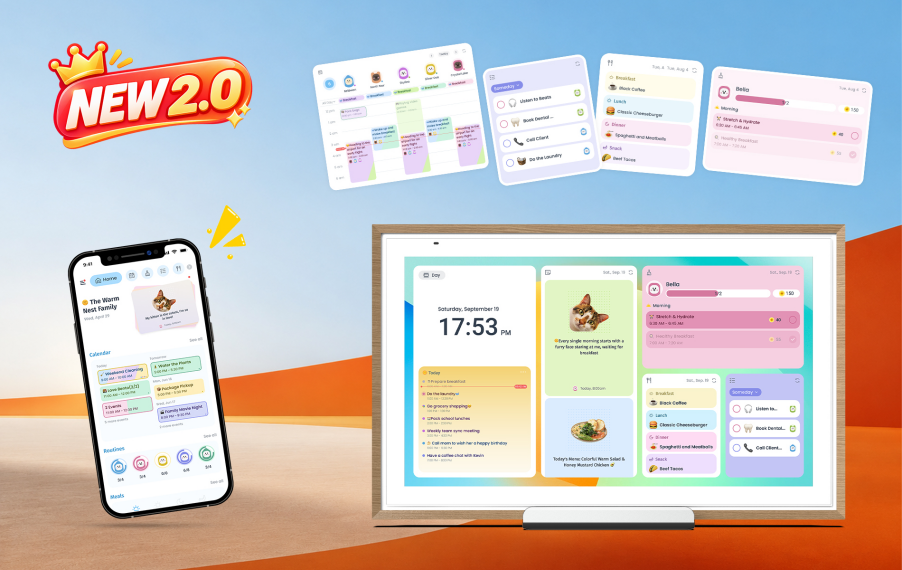
    Photo Credit: Apolosign

    The Apolosign Digital Calendar is designed to encourage the entire family to enter information, rather than placing all the responsibility on one person. Family members, including children, can contribute to planning and organizing a schedule with helpful tools included in the digital calendar. 

    For added convenience, the calendar can sync with popular app-based calendars and features a digital display that combines scheduling, tasks, meal planning, and communication. 

    A more visual way to see family life

    Following its 2.0 update, the Apolosign Digital Calendar has a redesigned interface with a brighter, more visually appealing UI, and includes new animated elements. For ease of use, it also has a redesigned sidebar and feature layout. The look was intentionally designed to make the product more engaging and simple to navigate for all members of the family.

    Practical visuals deliver the information users are looking for quickly and can hold more details than a traditional paper calendar.  A parent can review their family’s activities with a glance. A kid can check on their after-school events and their chores. 

    The family cook can also use the calendar to create recipes manually or have the AI assistant help them. The AI option can identify recipe information from uploaded photos or import recipes from supported websites. 
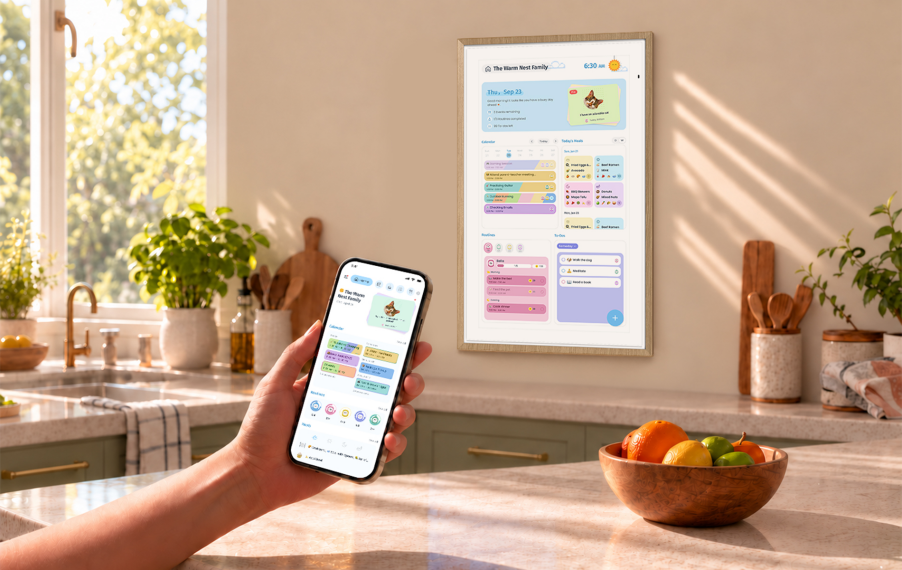
    Photo Credit: Apolosign

    Making everyone’s schedule easier to follow

    One significant change with the 2.0 software update is the Family View. Parents, grandparents, caregivers, and kids can review different members’ schedules and tasks on one screen. Each family member can be assigned a color so they can quickly spot information. 

    Another feature is Event Highlight, which makes important events stand out on the calendar. School activities, doctor’s appointments, work commitments, and household tasks are presented in a format that doesn’t require sorting through separate schedules. 

    For example, a family could use Family View to see that one child has soccer practice while another has a school project due and a parent has a late meeting. They could then add a highlighted reminder about the practice, assign another family member to help with the project, and plan a quick meal for that evening, all in the same place.

    The Apolosign Digital Calendar is a hub of information for busy families, helping them track everyone’s priorities, avoid conflicting appointments, and not miss important events. The subscription-free digital calendar makes sharing information simple and fun. 
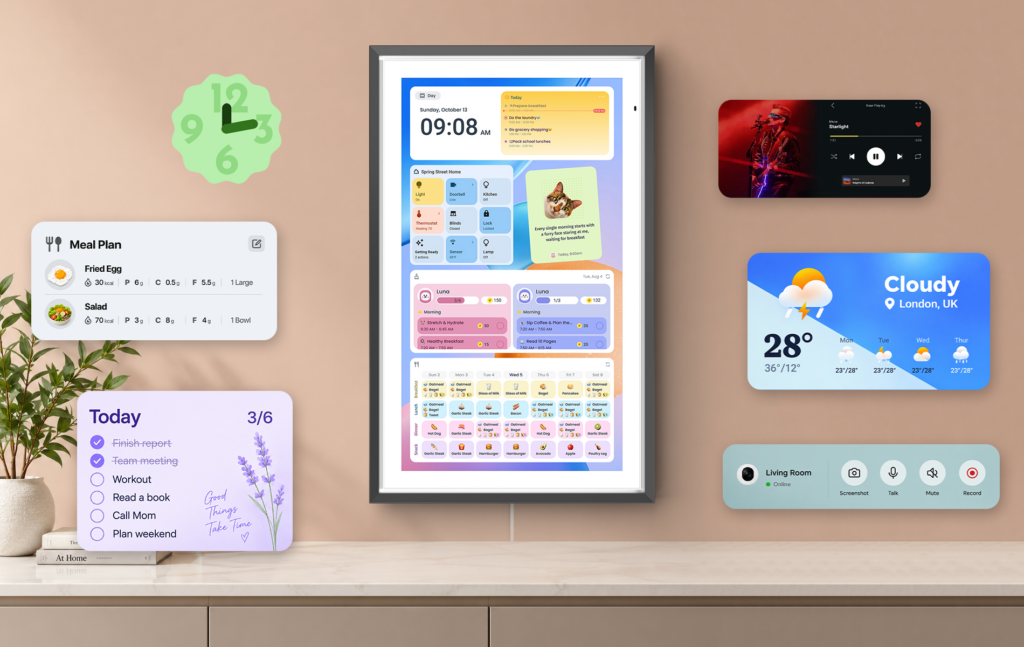
    Photo Credit: Apolosign

    From family notes to interactive communication

    The Apolosign Digital Calendar has also upgraded the Stickies feature through its 2.0 software update. Stickies give families a place to post notes and reminders to themselves and each other. Another helpful feature is the countdown reminders, so no one misses an important event or appointment. 

    The digital wall calendar also includes image sharing and cropping, allows different image shapes, and has AI-powered background removal. The AI-powered image capabilities empower each family member to personalize how they share their information. 

    Family members can add stickies and images to communicate with each other visually. Children can express themselves through images and post what matters to them and what they want to share. 

    Bringing chores and routines into the same system

    The Apolosign Digital Calendar is focused on encouraging the whole family to participate, instead of just having parents assign tasks. It has a To-Do Creator/Creator View that shows who created the entry, and it only takes one tap to clear completed tasks. It can also give points and rewards to children for contributing to the calendar or fulfilling tasks. 

    By bringing schedules, household tasks, meal planning, and family communication into one shared space, the Apolosign Digital Calendar can make everyday organization feel less like one person’s responsibility and more like a collaborative family routine. Each member can see what is happening, contribute to plans, and stay connected as the week unfolds.


  • Beyond the French way: 7 Camino de Santiago routes that beat the crowds

    Photo by Győző Mórocz via Pexels.

    The French Way is the Camino de Santiago most people picture, and by the numbers it’s still the most popular route. Of the roughly 531,000 pilgrims who collected a Compostela in 2025, a record, about 46% took it, according to the Pilgrim’s Office in Santiago de Compostela.

    That leaves roughly 289,000 who didn’t.

    Here’s where those pilgrims are going, and which route might suit you better.

    The Numbers at a Glance

    RouteShare of 2025 CompostelasApprox. lengthBest for
    French Way (benchmark)~46%770–785 kmThe classic, with the most services
    Portuguese Central~19%240–260 km from Porto; ~119 km from TuiFirst-timers
    Portuguese Coastal~17%~270 km from PortoSea views, gentle terrain
    English Way~5.7%117–122 km from FerrolA one-week walk
    Primitivo~5.3%300–320 km from OviedoMountains and history
    Norte~4%830–845 km from IrúnLong, coastal, hilly
    Vía de la Plata~1.7%~930 km via SanabrésSolitude
    Winter Waynot broken out255–267 km from PonferradaQuiet valleys

    Shares are rounded and based on Pilgrim’s Office figures as compiled by several Camino data sites. Lengths vary by source and variant.

    1. Camino Portugués (Central): The Inland Route 

    In 2025, the inland Central route topped 100,000 pilgrims, up about 6% on 2024. Many start in Tui, on the Spanish border, for roughly 119 km through the Rías Baixas, past Pontevedra, Caldas de Reis and Padrón.

    The route from Tui can suit first-timers, though it carries more asphalt than the French Way. From Lisbon, the full route runs about 610–620 km.

    2. Portuguese Coastal Way: The Atlantic Route

    Starting in Porto, the Coastal Way hugs the Atlantic for around 270 km, with boardwalks, dune paths and little climbing. It joins the Central route at Redondela, and many pilgrims start closer to Spain, in A Guarda, Baiona or Vigo, to shorten it.

    The Coastal Way accounted for about 17% of the Compostelas recorded in 2025.

    3. Camino Inglés: The Quick One

    Medieval pilgrims from the British Isles and Scandinavia landed at Ferrol and walked inland, and the route is still short. From Ferrol, it’s about 117–122 km, usually five stages. The A Coruña branch is shorter.

    It took about 5.7% of 2025 pilgrims. Time-poor walkers love it for that reason.

    4. Camino Primitivo: The Original Way

    It traces the route attributed to King Alfonso II of Asturias in the 9th century, from Oviedo, and is generally regarded as the oldest path to Santiago. Expect around 300–320 km, mountains, and 14 stages or so.

    It’s no pushover. Even so, the Primitivo carried about 5.3% of pilgrims in 2025, with numbers up about 14% from the year before, per Pilgrim’s Office-based figures.

    5. Camino del Norte: The Rugged Coast

    At roughly 830–845 km, the Norte is a serious undertaking. It runs from Irún through the Basque Country, Cantabria and Asturias into Galicia, with cliffs, beaches and a lot of hills.

    At Oviedo, many walkers switch to the Primitivo. If you want less time, starting in Ribadeo or Vilalba trims it to about 120–190 km.

    6. Camino de Invierno: The Winter Way

    Starting in Ponferrada, the Winter Way covers around 255–267 km through the Valdeorras region and Ribeira Sacra’s Sil valley. It’s said to have offered a lower-altitude alternative when snow closed the mountain passes of the French Way.

    It’s among the least crowded Caminos, with quiet roads, vineyards and river canyons, though services are thinner than on the main routes.

    7. Vía de la Plata: The Long, Lonely One

    Beginning in Seville along an old Roman road, it runs about 1000 km via the Sanabrés branch, crossing open plains and scattered villages. It took only about 1.7% of 2025 pilgrims, which tells you what to expect: solitude.

    Services can be sparse, with some stages running past 30 km. The Sanabrés branch, from Granja de Moreruela, is about 365 km. One agency advises against doing it in summer because of the heat and lack of shade.

    Bonus: Finisterre and Muxía

    Reverse the usual direction. This route starts in Santiago and runs about 90 km to Finisterre, or around 120 km including Muxía, on Galicia’s Costa da Morte. It’s a popular add-on after arriving in Santiago.

    How to Choose

    Match the route to the person you are.

    • Short on time (about a week): English Way or Portuguese from Tui.
    • First Camino: Portuguese Central or Coastal.
    • Want quiet: Primitivo, Winter Way or Vía de la Plata.
    • Want hills and views: Norte or Primitivo.
    • Have a month or more: Norte, Vía de la Plata or Lisbon to Santiago.

    For stage-by-stage maps and distances across all of these paths, dedicated Camino de Santiago route guides list typical stage lengths, which tend to run between 20 and 30 km a day, and show where services thin out.

    The Compostela Rules

    If you plan to apply for a Compostela, check the Pilgrim’s Office’s requirements for your route and mode of travel. Pilgrims collect stamps along the way in a credential, and present it at the Pilgrim’s Office.

    Many pilgrims walk only part of a route. Sarria on the French Way and Tui on the Portuguese are common starting points.

    When to Go and What It Costs

    April to October is the usual advice, with May, June and the second half of September especially pleasant and less busy. Winter brings cold, rain and short days.

    For budgeting, factor in public hostel accommodation and meals at local bars and restaurants. Private rooms and hotels cost more, and the price of getting to and from your start point isn’t included.

    Common Questions About Camino Routes 

    By Pilgrim’s Office shares, the Vía de la Plata (about 1.7%) and Norte (about 4%) draw the smallest crowds among the main routes, while the Winter Way is also known for its peace.

    The Portuguese Way from Tui is one option for beginners to consider, though it has more road walking than the French Way.

    Cyclists can follow Camino routes too, including the Portuguese Way. Check the Pilgrim’s Office’s requirements for cyclists if you plan to apply for a Compostela.


    Sources: Oficina del Peregrino (Pilgrim’s Office, Santiago de Compostela) figures as compiled by CaminoWays and Camino Mio; Fundación Jacobea 2024 report; Via Lusitana; Spain.info; American Pilgrims on the Camino; Viajes Camino de Santiago route data. Figures are rounded and differ slightly by source.

    Prices are estimates and may change. Check current rates before booking.

  • Rideshare safety during the holiday party season

    Rideshare services are a great way to get home after drinking at a holiday party. Here are a few precautions to take before and during your ride.

    Photo by Alina Kurson: https://www.pexels.com/photo/vehicles-traffic-in-the-city-road-8732920/

    The holiday season brings plenty of reasons to celebrate, from office parties to family gatherings and nights out with friends. And for many people, those celebrations include a drink or two.

    Whether you’re sipping on a cocktail with your coworkers or enjoying a nice warm mug of mulled wine with friends and family, if you’re drinking, you shouldn’t be driving. In most states, driving with a blood alcohol concentration (BAC) of 0.08% or higher is illegal for drivers 21 and older. But alcohol can affect your driving ability well before you reach that limit. That’s why arranging a sober ride is the safer choice if you plan to drink.

    If you’re out at a party and you’ve been drinking, taking a rideshare home is a great alternative to driving yourself. It lets you enjoy the evening without worrying about getting behind the wheel after drinking. If you’re planning to use a rideshare this holiday season, a little preparation can help make the experience safer and less stressful. Here are some tips on how to plan your rideshare strategy, what to do when you order a ride and what to do in the possible event that even your rideshare ends up in an accident.

    Drinking and Driving: The Rideshare Option

    A rideshare can make getting to and from holiday parties easier, especially when you plan to drink. Rideshare apps make it easy to request a ride, although availability and wait times can vary. Some rideshare services also let you schedule a pickup in advance if you know when your event will end.

    Here are a few things to take care of before heading out.

    Set up the Rideshare App Before You Leave

    Many platforms require several setup steps, such as downloading an app, creating an account, adding your personal details and verifying phone numbers and payment options. It’s worth taking the time to set this up before you leave the house so you aren’t scrambling or delaying your departure from a party.

    Plan Ahead

    Consider when you’re going to need a ride home from a party. If you know you’ll be drinking, consider taking a rideshare both ways. 

    Remember the Golden Rule

    If a friend or coworker has been drinking, consider helping them arrange a safe ride home, too. Some rideshare apps let you choose if a ride is for you or for someone else. 

    Plan on Alternative Options, Too

    If you find you don’t have good cell service, your phone battery dies or your rideshare platform isn’t working, it’s good to think of alternative plans ahead of time. Walking home after drinking isn’t a safe alternative, either. Poor visibility, heavy traffic and unfamiliar surroundings can create additional risks. 

    When traveling in groups, designating a driver who can stay sober is still a smart move for a late-night event. Calling a taxi service is also a strong backup to a rideshare app. And if you’re in a metro center, plan ahead for what your public transportation options are if you need a fallback. 

    Tips When Ordering a Rideshare at a Party

    When it comes to ordering the ride itself, there are a few things you want to make sure you’re thinking about, especially if you’ve been drinking and may have compromised judgment. Here are a few precautions to take before and during your ride:

    • Match the vehicle and license plate. Rideshare services should give you basic information about your driver. Just because a car, truck or SUV looks right doesn’t mean it’s your ride. Make sure to match the make and model as well as the license plate ID against your booking details every time.
    • Confirm your driver’s details, too. Rideshare services are set up to be safe, but you should follow protocol if you want a secure trip. Along with verifying the vehicle, you can check the driver’s ID. Don’t ask if they are who you think they are. Instead, ask for their name and see if it matches the name in your app. Look at the driver’s photo, too, and compare it to their face before entering the vehicle.
    • Enable extra verifications for your ride. If you want to be extra safe, set up PIN verification when available to help confirm your ride. That way, you always know you’re locked in with the right driver before you pull out.
    • Be safe about pickup locations. Just because you aren’t driving doesn’t mean you’re safe on the road, especially if you’ve been drinking. It’s important to pick safe places where you can find, check and enter a vehicle safely. Choose pickup locations with good lighting. Make sure these are away from moving traffic, too.
    • Wait indoors until your driver arrives. Rideshare services are typically fast and efficient, but just like any transportation option, they can be delayed. Whenever your circumstances allow you to wait indoors, do so. During the holidays, this can be warmer, and late at night, it can be the safer option, too.
    • Share your trip details. Many rideshare apps let you share your route and estimated arrival time with someone you trust. Consider using this feature, especially when traveling alone or late at night.

    What To Do If Your Rideshare Gets in an Accident

    Taking a rideshare is a responsible alternative to driving after drinking, but accidents can still happen. If that happens, you want to follow the right protocols. Many of the steps are similar to those you’d take after any car accident, but rideshare passengers may have additional insurance considerations. California personal injury firm DK Law lays out the next steps in the event of a rideshare crash. Here’s the short version:

    • Report the crash. Once a police report is created, request a copy of the report for your own records.
    • Seek medical attention. This is always a priority. You might have injuries that require an ambulance. Even if you don’t, factors like whiplash can become a problem later on. Work with medical professionals to make sure you’re managing any injuries and symptoms properly. 
    • Gather evidence right away. While you’re at the crash site, take photo evidence of the vehicles, visible damage and the surrounding scene. If you have significant injuries, ask someone else to do this. If you make a claim with insurance or the rideshare service, they will ask for these. 

    If you’ve been injured in a rideshare accident, consider speaking with a personal injury attorney. Depending on the circumstances, multiple insurance policies may be involved, and determining which coverage applies can be complicated.

    Using Rideshare Services for Holiday Parties

    Holiday parties are a great chance to cut loose and relax. If you’re going to drink, though, make plans ahead of time to get home from a party without needing to drive. 

    A rideshare is a great way to do this, but if you go that route, remember that you’re minimizing risks and complications, not eliminating them. Plan ahead, confirm each ride when it arrives and do everything you can to be safe and responsible in the event of an accident.

    Must be 21 to purchase. Please drink responsibly. 

    The information provided in this article is for general informational and educational purposes only. It is not intended as legal or professional advice. Readers should not rely solely on the content of this article and are encouraged to seek professional advice tailored to their specific circumstances. We disclaim any liability for any loss or damage arising directly or indirectly from the use of, or reliance on, the information presented.

  • Alloop’s smart ring turns into a fitness band, but its AI trick is even cooler

    Alloop Trio is a shape-shifting health wearable with a tiny sensor, a voice-enabled AI agent, and a few clever ideas about how wearables might be used in the future.

    Imagine finishing a workout, tapping your wrist, and telling your fitness tracker, “Just finished four sets of bench presses at 150 pounds. Feeling great today.”

    (Credit: Alloop)

    That’s the kind of interaction Alloop wants to make routine with Trio, a new wearable unveiled in New York City on October 21. It combines a smart ring, fitness band, and voice-enabled AI module into one modular system, but the real ambition goes beyond making another device that tracks your sleep and heart rate.

    Alloop wants to turn your fitness tracker into a personal health agent you can talk to.

    A smart ring that doesn’t have to stay a ring

    The Cube is a 2.4-gram sensing module that pops into either a ring or wristband. Instead of buying separate devices for different activities, users can switch the same sensor between the two in seconds.

    Want something discreet for sleeping? Use the ring. Prefer a band at the gym? Swap the Cube over. The complete ring weighs 7 grams, while the band weighs 24 grams. The Cube includes PPG, temperature, and motion sensors to track familiar metrics such as heart rate, blood oxygen, sleep, and physical activity.

    Alloop claims seven days of battery life and 5 ATM water resistance for the Cube. It also tries to simplify one of the most annoying parts of buying a smart ring: sizing. Instead of requiring a separate sizing kit, the company plans to include three ring sizes within the size group customers select.

    Halo makes the wearable feel a little more like JARVIS

    Attach the Halo module to Trio’s wristband, and the device becomes a wearable interface for an AI assistant. Halo adds battery capacity, vibration feedback, customizable lighting, and a tap-to-talk function that connects to Alloop’s Personal AI Health Agent.

    That means users can log a meal, describe how they’re feeling, or record a workout simply by speaking to their wrist.

    Alloop’s launch demonstration included a workout journal example in which someone records four sets of bench presses at 150 pounds, along with how they felt afterward. Another example showed a user asking the Agent to remind them to stretch at 3 p.m.

    Halo also uses five light colors to indicate heart-rate training zones, letting you quickly check exercise intensity without staring at a screen. Another clever detail: Halo can charge the Cube while you wear it, reducing interruptions and keeping tracking continuous.

    Alloop compares the experience to having a small personal assistant available throughout the day. It’s an appealing idea, although there’s still a difference between successfully demonstrating a few voice commands and delivering a genuinely useful AI companion.

    Still, the direction is interesting. Most health trackers communicate with you through numbers, graphs, and notifications. Alloop wants that relationship to become a two-way conversation.

    Your smartwatch knows you slept badly. Does it know why?

    Wearables can measure sleep duration, count steps, and monitor heart rate. They can’t necessarily tell what happened that might explain those readings.

    (Credit: Alloop)

    Maybe you slept poorly because you ate late. Maybe your heart rate was elevated after a stressful afternoon. Maybe your workout felt harder than usual because you hadn’t eaten enough.

    Alloop’s Personal AI Health Agent is designed to work with both sides of that information.

    Through Easy Journal, users can record food, exercise, symptoms, and everyday observations using voice, text, or photos. The Agent can then consider those details alongside measurements collected by connected wearables when answering questions about personal health patterns.

    The platform also includes Bio Age, which examines six areas of health: sleep, nutrition, activity, cardiovascular health, metabolic health, and musculoskeletal health.

    And importantly, you don’t need to buy Trio to use the app. Alloop supports connections through Apple Health and Health Connect, allowing compatible health information from other devices to feed into the platform. It also says no subscription is required.

    That makes Trio an interesting proposition. Instead of building an AI feature that exists exclusively inside its wearable, Alloop is developing an AI health platform and giving it a dedicated physical interface.

    The ring and band collect information. Halo lets you talk to the Agent. The software is intended to connect it all.

    The design is clever

    (Credit: Alloop)

    Trio’s design has more to like than the interchangeable sensor. Alloop claims it spent a year refining the hardware, conducting more than 200 design validations and over 5,000 drop tests. 

    At the New York launch, Alloop co-founder Frank Wong and industrial designer Carter McGuyer discussed the challenges of modular wearable design, including ergonomics, miniaturization, and making AI interactions practical without relying on a screen.

    But designing an appealing interface is only half the challenge.

    An AI health agent that encourages people to share details about their meals, moods, and routines also needs to earn their trust. Alloop says it encrypts health data and is strengthening its privacy and security practices to meet GDPR and CCPA requirements, while pursuing a SOC 2 examination and ISO/IEC 27001 certification. 

    Is this what comes after the smartwatch?

    Alloop Trio isn’t the first wearable to promise smarter health insights, and conversational AI is hardly new. What’s interesting is the way it brings those ideas together.

    A small sensor that moves between different wearable forms solves one practical problem. A voice interface that lets users capture everyday experiences solves another. Connecting both to an AI agent that can work with information from other health devices is the more ambitious part.

    It’s easy to imagine the appeal of a wearable that remembers the workout you just described, tracks your sleep, and lets you ask questions about your habits without digging through several apps.

    Whether Alloop can deliver that experience consistently remains to be seen. But it offers a more interesting direction for wearable AI than simply adding another chatbot to a fitness app.

    This article is for informational purposes only and does not substitute for professional medical advice. If you are seeking medical advice, diagnosis or treatment, please consult a medical professional or healthcare provider.

  • Meet Tobias Ellehammer, the choreographer behind AJ McLean’s latest music video

    Danish choreographer Tobias Ellehammer directed the choreography for the Backstreet Boy’s two-night ‘Into Your Heart’ shoot


    Tobias Ellehammer. Photo: Jeremy Jackson

    The new AJ McLean solo single ‘Into Your Heart,’ which appears on the Backstreet Boy’s upcoming album ‘SEX LOVE MONEY,’ premiered on Sept. 15. He says the video is a dance-heavy tribute to the 1979 film ‘The Warriors,’ filmed across two consecutive overnight shoots, with a cast running intricate routines until the sun came up.

    The man behind the moves is Tobias Ellehammer, a Danish choreographer who served as Head Director of Choreography on the project. McLean, 48, has been open about how far the process pushed him. “This is probably the most intricate of any choreography that I’ve ever done in my life,” McLean said in an Instagram video. “Like Tobias said, I wanted him to challenge me. He challenged me, he challenged all of us.”

    Tobias Ellehammer. Photo: Jeremy Jackson

    The relationship goes back a few years to a smaller dance video in which Ellehammer contributed choreography under head choreographer Dana Wilson. He says the two stayed in touch, and in May, McLean called with an idea he could not let go of. “He called me with an idea he was excited about and asked if I wanted to take the lead,” Ellehammer said. “I loved the idea he had, and from there everything flowed very organically.”

    Tobias Ellehammer. Photo: Jeremy Jackson

    Ellehammer notes he choreographed the majority of the video himself and brought in three contributing choreographers to represent particular styles in the most authentic way possible. It was a deliberate choice, made to represent the styles in the video authentically and to respect the lore of ‘The Warriors,’ the movie the video pays tribute to. Ellehammer stayed off camera this time. The job was directing, not dancing.

    The shoot ran two nights, back to back, with the final chorus being the hardest part of the routine. “It takes a certain group of people to make shooting dance sequences at 3 a.m. fun, and this cast was definitely the right group,” Ellehammer said. The last full cast shot of the production produced some of the funnier frames of the entire shoot: the whole cast running away from the video’s fake cop. Before everyone left the set, McLean gathered the cast for one final huddle, thanking them and telling them what he wanted the video to mean for the dance community. “It was the perfect thing to end on,” Ellehammer said.

    Tobias Ellehammer. Photo: Jeremy Jackson

    Ellehammer grew up in Copenhagen and discovered dance at 12, drawn in by Justin Timberlake’s ‘My Love’ video and the moves of its choreographer, Marty Kudelka. Early on he says he was the youngest dancer on Team Basim, Denmark’s Eurovision act. He built an audience online, where his conceptual tribute videos ‘Burn It Up,’ ‘Black or White’ and ‘Scream’ collected millions of views, and American television audiences met him on NBC’s World of Dance as part of Tobias & the EZTwins.

    Then came the full-circle chapter. Nearly two decades after the video that started it all, Ellehammer was working alongside Kudelka himself: he contributed choreography to Justin Timberlake’s Forget Tomorrow World Tour, danced on it as the male swing, and co-choreographed Timberlake’s ‘Selfish’ performance on The Graham Norton Show. His proudest moment, he says, came when the tour stopped in Copenhagen on his mother’s birthday, and he found himself dancing in his hometown, on Timberlake’s stage, to choreography of his own mixed with Kudelka’s, the same moves that made him pursue dance as a kid.

    Tobias Ellehammer and AJ McLean between takes on the set of ‘Into Your Heart.’ Photo: courtesy of Tobias Ellehammer

    The credit list has grown since. He shaped BTS star Jimin’s ‘Who’ for the music video and The Tonight Show Starring Jimmy Fallon, and he has danced for Ariana Grande, Justin Bieber and Jason Derulo, and worked with Jungkook, Kylie Minogue and Liam Payne, with K-pop acts like SF9’s Taeyang and RIIZE among those performing his work, and has also taught and trained Shiloh Jolie for years. Television came calling too, with X Factor, Eurovision, Strictly Come Dancing and Dancing with the Stars.

    Between projects he stays close to the craft itself. He is on the faculty of Los Angeles’ Millennium Dance Complex, and says his Ellehammer Intensives have sold out multiple years in a row, and in June 2024 he launched Anomaly, his own dance company, which passed its two-year mark this summer. Ellehammer says his recent months added a runway show and social campaign for Motorola’s flip phone launch with Paris Hilton, and that most weekends he is on the road with the Dancemakers convention, teaching hundreds of young dancers in a different city every week.

    ‘Into Your Heart’ is out now on McLean’s YouTube channel, with the album ‘SEX LOVE MONEY’ and his solo tour is in progress. Follow Tobias Ellehammer on Instagram for what comes next.

  • The insurance company called the next day. Should you answer?

    Photo by Engin Akyurt on Pexels

    The number of car crashes annually are declining, but the expenses after the crash are increasing. According to recently available accident data, the collective cost of all annual motor vehicle injuries in the United States totals over $559 billion.

    Insurance carriers are aware of these facts, which is one reason that adjusters often call people who submit claims immediately. If you’re an accident victim who’s been hurt by the actions of another, you might appreciate their speediness. However, adjusters aren’t acting fast because they want you to get compensated. They’re often attempting to use the clock to get an advantage.

    When an insurance adjuster calls you right away after an accident, it benefits the insurance carrier. You’re likely to be in an emotional state in the first few days after your crash. You may want to feel less overwhelmed, especially if you suffered any kind of physical or emotional injury. Consequently, you might accept a settlement offer in the moment, even if it’s much less than you could receive based on the trauma you experienced. 

    Another upside to contacting you soon after the accident relates to your emotional state of mind. It’s common for people who are under stress to make comments that could be used against them. For example, you might process the accident out loud while speaking with an adjuster and say that you may have been partly at fault or that you’re feeling better since the accident. Both those statements could be used against you later to prove that you deserve less in terms of restitution.

    Is this sneaky? Perhaps, but it’s also completely legal. The adjuster has the right to call you, and you have the right to say whatever you want. But in the moment, you might not be thinking clearly, which gives the adjuster an advantage.

    Adjusters may use their earliest phone call to request documentation they know you probably don’t have yet. This is designed to make you feel overloaded. Under stress, you might accept any offer the adjuster makes so you can move on with your life.

    Given these realities, you might wonder what you can do to stay in control of your accident claim. To do this, there are several steps you can take immediately after an accident.

    1. Seek legal representation to protect your rights

    An adjuster has been through many accident cases. You (hopefully) haven’t. This is where you can bring in professional help.

    Within about the first 24 hours after your crash, call a law firm. Look for a local firm that specializes in handling accident cases and has a good reputation for winning these kinds of cases. Many firms won’t charge you to have a conversation with their staff, so you’re not losing anything by making a call or setting an appointment.

    As Missouri-based personal injury law firm Harper Evans, Hilbrenner & Netemeyer notes, cases can become complicated quickly. You might not think you’re injured, but you could be facing unexpected future medical bills. A firm with experience working through complex injury cases can serve as an advocate. Lawyers can speak with adjusters and manage your claim (including in court if necessary) while you recover.

    2. Tell the insurance adjuster you’ll be working with a lawyer

    Whether or not you’ve picked a lawyer for your accident case, you should tell the insurance adjuster that you plan to review your legal options. At that point, the adjuster may try to tell you that you’ll receive less of a settlement if you work with a law firm. This is only partly true, so be careful because it’s a tactic that’s designed to make you think the adjuster is on your side.

    The truth is the adjuster has no way of knowing how much you’ll actually receive from your settlement. Will a lawyer take a percentage of what you receive? Yes. But if the lawyer gets you a higher settlement offer than you would have received, you could receive an increased restitution to cover medical payments, property damage, lost wages and related costs. According to research, the average accident settlement that’s led by a lawyer is 3.5 times higher than similar settlements led by accident victims. 

    3. Let your lawyer take charge

    Once you’ve picked the right law firm, refer all adjuster calls to the firm’s number. Resist the temptation to talk with the adjuster or have discussions about your case if your lawyer isn’t present. The things you say to the adjuster might derail your case.

    If the adjuster continues to call you, tell your lawyer. A reputable firm will have processes in place to handle aggressive adjusters. 

    The same goes for documentation. An adjuster might tell you that you should submit receipts, medical records or other information. Get advice from your lawyer before exposing personal items to an adjuster.

    Accidents happen every day across the country, and most (fortunately) don’t cause injuries. Yet some do, and if you’re hurt, you may want to protect yourself and your interests. That means knowing how to handle phone calls from adjusters. Though adjusters may act like your friend, they’re not in your corner. That’s why it’s helpful to find someone who can be.

    The information provided in this article is for general informational and educational purposes only. It is not intended as legal, financial, or professional advice. Readers should not rely solely on the content of this article and are encouraged to seek professional advice tailored to their specific circumstances. We disclaim any liability for any loss or damage arising directly or indirectly from the use of, or reliance on, the information presented.

  • Tems brings African-grown diamonds to the global stage

    Photo Credit: Digital Peaches

    Tems’ music took center stage at All Points East, while her natural diamond jewelry brought an added layer of meaning to a performance celebrating creativity, identity, and African pride. 

    The two-time Grammy award winner co-headlined the London festival’s opening night alongside British singer Jorja Smith and delivered a set packed with fan favorites and a surprise appearance from Dave. Alongside the music, her outfit and a brief exchange with the audience also highlighted her connection to African creativity and identity.

    Tems performed in a black, multicolored beaded dress. Paired with it was natural diamond jewelry by Shola Branson. Mid-set, Tems spotted a sign in the crowd that read, “Beautiful things come from Africa.” She agreed with its message before telling the audience they were “shining like real diamonds.” 

    It was a brief exchange between artist and audience, but one that connected African pride with the natural diamonds Tems was wearing on one of London’s biggest festival stages.

    Fashion gives Tems another way to express herself, and she uses that to bring attention to the people and places that inspire her. Her All Points East look did exactly that.

    Shola Branson uses natural diamonds to create jewelry inspired by African design. By wearing his jewelry at All Points East, Tems introduced his work to a wider audience and brought more visibility to African-inspired luxury design.

    A Closer Look At Tems’ Jewelry

    In the backstage and performance footage of the sold-out August 21 show at All Points East in Victoria Park, the Nigerian artist can be seen wearing a stack of natural diamond bracelets and several statement rings by Shola Branson.

    Instead of wearing one large piece, Tems wore natural diamonds across both her hands and wrists. The bracelets shone under the stage lights throughout the performance, and the closer shots gave a better look at her statement rings.

    The jewelry was paired with a custom black macramé mini dress by Serbian label MIO. The dress featured colorful beads, cutout sides and a long-fringed skirt. The natural diamonds added more elegance against the dress’s bold texture and bright colors.

    Tems explained that her clothing needs to move with her so she doesn’t get distracted on stage. Natural diamond jewelry was a great choice because it added a touch of glamor to her outfit while keeping it comfortable for the stage. “The natural diamonds really finish the look for me,” she said.

    Who Is Shola Branson?

    Photo Credit: Digital Peaches

    Shola Branson is a London-based British-Nigerian jewelry designer known for creating pieces that stand out for their bold structure and timeless feel.

    Branson worked in fashion and antique jewelry before launching his own label in 2018. His jewelry stands out for its symmetry, textured gold and distinctive arrangements of natural diamonds and gemstones.

    Branson calls his designs “future artefacts.” They look like ancient treasures made for the modern world. The jewelry chosen for Tems was the same. Her rings looked like small pieces of wearable art with bold shapes and natural diamonds arranged unexpectedly. And the bracelets brought more texture and weight to the familiar tennis style.

    No two stones in Branson’s jewelry are expected to look exactly alike. Perfectly matched stones are never the goal. That’s part of the reason his jewelry has such a unique character. That kind of approach makes his work especially fitting for Tems, since her style is rarely predictable.

    The Larger Story Of African Diamonds

    Photo Credit: Digital Peaches

    Africa’s relationship with diamonds is complex, and the experience differs greatly from one country to another. In Botswana, natural diamonds have supported jobs and helped fund investment in infrastructure and public services. 

    Botswana is one of the clearest examples. The country’s growth has been strongly supported by diamonds, which account for around 80% of exports and one-third of government revenue.

    Diamond income has also helped build schools, clinics and roads. The industry also creates jobs in mining, sorting, cutting, polishing, jewelry making and retail.

    It’s important to understand though that no two diamonds have the same background. Knowing where a diamond came from and how it reached the market can help you understand and appreciate the people and skills behind the jewelry. With this broader context in mind, the exchange between Tems and the crowd at All Points East becomes even more meaningful. 

    African Luxury On Its Own Terms

    Using African materials and taking inspiration from African designs is common in fashion, but African creators do not always receive the recognition or platform they deserve.

    At All Points East, Tems brought together African music, a British-Nigerian designer’s craftsmanship and natural diamonds from the continent. The combination reflected the message on the fan’s sign: “Beautiful things come from Africa.”

    There was no need for a long speech. A message held up in the crowd became part of the performance when Tems noticed it and echoed its sentiment from the stage. 

    A Spotlight That Reached Beyond The Stage

    Photo Credit: Digital Peaches 

    Tems has become one of Africa’s most recognizable voices on the global music stage. She has won two Grammys, including Best African Music Performance for “Love Me JeJe,” and has helped bring African music to audiences far beyond the continent. Her songs, work with other artists and appearances on major stages have made her famous around the world.

    At All Points East, her appearance helped spotlight African creativity and craftsmanship before thousands of festivalgoers. 

    The natural diamonds added to her stage look while also reflecting the broader theme of African creativity and craftsmanship that ran through her fashion choices and her exchange with the crowd.

    When Tems told the audience they were shining like “real diamonds,” the comparison tied the crowd to the message she was wearing. On that London stage, Tems offered a glimpse of the beauty and creativity that Africa has to offer.

  • Do spicy noodles make people dance? Buldak thinks so

    Image Credit: Buldak

    After fans helped the Korean noodle brand break a Guinness World Records® title, Buldak decided the moment deserved its own soundtrack.

    Talk about bringing the heat and now the beat.

    What do you do when hundreds of spicy noodle lovers around the world come together to make history?

    If you’re Buldak, you make a song about it.

    The viral Korean noodle brand has officially earned a Guinness World Records® title, thanks to fans who spent one very spicy hour eating noodles, filming themselves and uploading their reactions to TikTok.

    And rather than simply celebrating with another bowl of noodles, Buldak decided to turn the achievement into something fans could dance to.

    Enter “Crave The Burn,” an original song and music video created to celebrate the community that helped make noodle history.


    Image Credit: Buldak

    Buldak had a challenge for their fans around the world. The goal? Break the Guinness World Records® title for the most videos of people eating instant noodles uploaded to TikTok in one hour.

    The previous record stood at 250 videos.

    Buldak fans delivered 335 qualifying submissions, officially setting a new world record.

    From fans filming in their kitchens to college communities gathering for noodle parties, the challenge brought people together around two of Buldak’s signature flavors: Original and Carbonara.

    Some participants took on the heat solo. Others gathered with friends, music and Buldak swag to turn the challenge into a full-blown celebration.

    YouTube stars the Stokes Twins also joined the effort, helping encourage their followers to participate, alongside other creators and fans around the world.

    But the real stars of the record-breaking moment were the everyday Buldak fans who showed up, hit record and embraced the burn.

    And that enthusiasm is nothing new.

    Since Buldak launched in South Korea in 2012, the brand has become popular on the internet, fueled in large part by people sharing their spicy noodle experiences online.

    Long before there was an official world record attempt, fans were filming themselves tackling the famously fiery noodles, challenging friends, inventing recipes and sharing their reactions.

    The viral Fire Noodle Challenge helped introduce Buldak to audiences around the world, while mukbang videos, taste tests and creative recipes kept the spicy obsession going.

    The Guinness World Records® attempt took something fans were already doing and turned it into one global moment.

    And Buldak wanted to give that moment a soundtrack.

    “Crave The Burn” blends pop energy with Latin-inspired sounds and English and Spanish lyrics, celebrating the brand’s bold personality and the fans who helped it make history.

    The accompanying music video, directed by Weston Allen with choreography by Brian Esperon, brings the celebration to life with energetic dance sequences and footage from the record-breaking challenge.

    It’s a fitting tribute for a brand whose popularity has been shaped by its fans’ creativity, humor and willingness to share their spiciest experiences with the world.

    After all, Buldak’s rise wasn’t built solely on traditional advertising. Much of its cultural momentum came from people voluntarily turning a bowl of noodles into entertainment.

    Now, those same fans have helped the brand earn a place in the record books and inspired an original song in the process.

    “Crave The Burn,” and its music video are a way to celebrate our fans, who have played such an important role in making Buldak what it is today and will continue to shape our future,” said Abbas Arslan, the Vice President of Marketing at Buldak. “We’re incredibly grateful to everyone who enjoys our noodles and helped make this achievement possible.”

    Buldak fans have proved that their love of spicy noodles can make history and now they’ve got a song to celebrate it.

    Watch and listen to “Crave The Burn” on YouTube Music and find the music video and more from Buldak on YouTube, TikTok and Instagram at @buldak_global.

  • Chuck E. Cheese and now Topgolf: Meet the CEO who has made a career out of working at America’s favorite fun brands

    David McKillips’ career has included leadership at Chuck E. Cheese and work in entertainment and attractions at Six Flags. Now he’s taking on a new role — and a new set of challenges.

    If you’ve celebrated a child’s birthday at Chuck E. Cheese, visited Six Flags or taken a swing at Topgolf with coworkers, you’ve encountered a brand that has been part of David McKillips’ career in entertainment. McKillips, 54, has spent three decades working with well-known American entertainment brands, including during periods of change and financial difficulty. After getting his start at theme parks SeaWorld and Sesame Place, he spent a decade at DC Comics in New York City.  He later joined Six Flags, where he worked during a debt restructuring, before leading Chuck E. Cheese through its pandemic-era bankruptcy. He is now CEO of Topgolf International, which combines golf with dining and social entertainment.

    He has built a career around the business of fun.

    “Every brand I have worked with has been in the business of creating memories,” McKillips said. “The families that walked into Chuck E. Cheese on a Saturday afternoon, the guests who showed up at a Six Flags park for the first time — they were not coming for the product. They were coming for the feeling. My job has always been to make sure the feeling is worth it.”

    “They were not coming for the product. They were coming for the feeling. My job has always been to make sure the feeling is worth it.”

    — David McKillips — CEO, Topgolf International

    A CAREER IN ENTERTAINMENT

    Before anyone knew McKillips as a turnaround CEO, he was cutting his teeth in the entertainment industry doing something considerably more glamorous: working with major celebrities and sports icons at Warner Bros. and DC Comics.

    “My background in entertainment IP shaped everything that came after it,” McKillips said. 

    From Warner Bros., McKillips moved to Six Flags, where he spent 13 years building what would become the foundation of his operating philosophy. He launched Six Flags Media Networks — the company’s sponsorship and licensing division. Then, he ran the In-Park Services Department, overseeing all operational revenue, managing employees across all U.S. parks. Next, he rose to SVP of International Operations, helping develop what became the first theme park in the Kingdom of Saudi Arabia, Six Flags Qiddiya, one of the most ambitious theme park developments in history, which includes the tallest, fastest and longest coaster in history, Falcon’s Flight, which opened last December.

    CHUCK E. CHEESE’S NEXT CHAPTER

    McKillips’ time at Chuck E. Cheese brought significant business challenges, including navigating the pandemic and the company’s bankruptcy.

    He joined CEC Entertainment, the parent company of Chuck E. Cheese, as President and CEO on January 21, 2020. Six weeks later, a global pandemic closed every one of their locations. The company lost roughly 90 percent of its revenue overnight. By June 2020, CEC had filed for Chapter 11 bankruptcy protection.

    Most people would have quietly updated their LinkedIn and moved on. McKillips did not.

    Instead, he oversaw the financial reorganization, raised new capital to rebuild the brand from the inside out. He remodeled every location, adding new entertainment, games, upgraded the pizzas and prizes. Then, he launched a new membership program and focused on development, expanding Chuck E. Cheese internationally, and created a global licensing and entertainment division to extend the brand’s beloved characters into film, television, and digital platforms.

    One publication memorably wrote that under McKillips, “the ‘E’ in Chuck E. Cheese might as well stand for ‘experiment.’” Coming from a trade publication not known for its compliments, that read as high praise.

    FROM THE MOUSE HOUSE TO THE CLUB HOUSE

    In February 2026, McKillips became CEO of Topgolf International, a brand that aims to make golf accessible to a wider audience, including people new to the sport. With many venues globally and the Toptracer ball-tracking technology powering both its bays and major broadcast golf coverage, Topgolf combines sports and social entertainment, bringing together areas that align with McKillips’ experience.

    “Topgolf is the gateway to golf,” he said. “Topgolf introduced the sport socially and casually, removing barriers and making it accessible to all. We make golf fun, welcoming and our new programs will make it a repeatable experience.”

    His appointment came as private equity firm Leonard Green & Partners completed a $1.1 billion acquisition of a majority stake in the company, with McKillips taking on responsibility for guiding Topgolf’s next phase. Since he took over, new venues have opened, leadership changes have been made, and McKillips has reportedly visited all 100-plus venues in his first 100 days on the job.

    McKillips has already announced a two-pronged strategy to win back the golfer and make sure Topgolf has the appeal to the social user as well.  For the golfer, he’s committed to create 10 million new golfers by 2030 with new competitions, virtual courses, leagues, struck an endorsement deal and media campaign with John Daly and inked partnerships with Spark Golf and World Series of Golf. 

    To appeal to guests looking for a social outing, McKillips is drawing on his experience at Chuck E. Cheese and exploring ideas such as arcades at Topgolf locations, pickleball courts and even curling at venues in Wisconsin and Minnesota during the winter. These possibilities, alongside efforts aimed at avid golfers, could help shape a new membership program targeted for early 2027.

    For someone who has spent his career in the business of making people feel good, this next chapter may be his biggest stage yet.

    “Topgolf introduced the sport socially and casually,  removing barriers and making it accessible to all. We make golf fun, welcoming and our new programs will make it a repeatable experience.”

  • Travel tips that could help you save money

    Image by Magnific 

    Travel can be costly, but deals may still be available. The gap between what a prepared traveler pays and what an unprepared one pays has never been wider. Airlines, hotels, and carriers have all built sophisticated pricing systems around impulse decisions and last-minute scrambles. Here is how to stay ahead of them.

    One potential way to save? Arranging your travel data before you leave rather than after you land. A travel eSIM lets you activate a local data plan on your phone before departure so you arrive connected without paying your home carrier’s international rates.

    Fly Smart: Timing and Alerts Can Help You Save

    The worst time to buy a flight is the moment you decide you want to go somewhere. Prices spike when demand climbs, and weekends are peak demand. Try comparing fares on Tuesday or Wednesday, but keep your search dates flexible, as lower prices may appear on other days too.

    Set a price alert on Google Flights for your route. Free, takes two minutes, and notifies you when fares drop. Search in incognito mode to help reduce any personalized pricing variables while you’re at it. When the difference can run into hundreds of dollars, the small habits can matter. Sorting out your phone data is another one: a Nomad eSIM takes a few minutes to set up before departure and can save more than travelers expect.

    Your Hotel Bill May Be Negotiable

    Chain hotels sell rooms according to their brand name. However, in the same neighborhoods, apartments, boutiques, and extended-stay options often provide more space, access to a kitchen, and a local feel for a fraction of the cost.

    If you’re staying at hotels, make sure you sign up for their loyalty program and book directly with them. Booking directly may offer competitive rates, while a hotel loyalty membership could provide perks such as free breakfast, room upgrades or late checkout, depending on the program, membership tier and availability. To find cheaper options, look to relocate your base of operations a few stops on the metro, bus, or taxi ride away from the main tourist area. It’ll often cut your costs and save you a ton of hassle.

    The Tourist Tax on Food Is Very Real and Very Avoidable

    A short walk from a famous landmark may lead to restaurants serving similar-quality food at lower prices. This can be worth exploring, though savings vary by restaurant and destination.

    The lunch window is another reliable move. Many restaurants with a dinner menu may offer it at lunchtime at a discount, and getting a reservation can be easier. Food markets, food halls, and spots popular with locals can offer enjoyable, affordable meals abroad.

    Your Phone Bill Is a Budget Leak You Can Plug Before You Leave

    This one can cost real money to travelers. Many US carriers charge $10 or more per day for international data on standard plans. On a 10-day trip, that is $100 or more in hidden fees that travelers simply didn’t account for on their travel budget.

    One of the options for these is a travel eSIM or mobile data plan that can be downloaded to a compatible phone and activated on arrival to unlock local data for use abroad. You may also be able to bypass the airport kiosk and risk unexpected roaming charges when you return home by using an eSIM! Nomad eSIM is one of the top providers in the space, offering travel data plans to over 165 countries at less than the typical roaming rates. Their experience has travelers buying a plan before departure and activating it upon arrival. With greater data allowance, broader coverage, and flexibility, Nomad’s value is designed to extend well beyond the typical data plan that comes with a phone-only contract.

    With regional plans, Nomad covers multiple countries for those traveling trans-regionally, meaning you can unlock data in one plan across multiple countries, avoiding having to purchase a separate plan in each country in your itinerary. This can save you money on any trip with more than one destination.

    The Card Fee Nobody Factors In

    Foreign transaction fees on credit cards typically run 2 to 3 percent per purchase. On a $3,000 trip, that is up to $90 in charges that produce nothing in return. Cards from Chase, Capital One, American Express, and others offer no foreign-transaction-fee options that cut this out entirely.

    If your current card charges these fees and you travel internationally more than once a year, switching to one without them could be a straightforward way to save.

    Pack These Habits, Not Just Your Luggage

    Smart travel spending comes down to what you sort out before you leave. Price alerts, a direct hotel booking, a restaurant two streets from the main drag, the right credit card, and a travel eSIM loaded onto your phone before departure. None of it is complicated. All of it adds up. Taking this approach may help travelers make their budgets go further without giving up the parts of a trip they value most.

    Prices and availability are accurate as of the time of publication and are subject to change without notice. Please check the retailer’s website for the most up-to-date pricing information.