Blog

  • Drying your hair without causing unnecessary damage

    Drying your hair without damaging it is easier said than done, because it takes into account more than just heat. Products, environment, and other factors can impact the health of your hair.

    Image credit: Pixabay

    Drying your hair can feel like a ritual, and like any ritual, it tends to require the right tools on hand. For many people, that might be a hair dryer, a towel, or a simple fan. Choosing the right items and products can impact how your hair feels all day.

    Finding advice on how best to dry your hair can be tricky, in part because different hair types affect how well any given method works. That said, some general rules apply, many of which focus on how to manage variables like heat, exposure, and duration. Knowing why those variables matter starts by understanding why hair gets damaged in the first place.

    Why hair can become damaged

    Each hair strand consists of an outer protective layer called the cuticle and an inner structure called the cortex, which gives hair its strength and elasticity. Excessive heat, friction, chemical processing, and repeated tension can lift or wear down the cuticle, leaving the cortex exposed and hair more prone to dryness or breakage.

    When discussing hair-drying methods, it helps to distinguish between temporary appearance concerns, such as frizz, dullness, and rough texture, as well as lasting physical damage, such as split ends, snapping, increased porosity, or persistent brittleness. 

    Unlike skin, hair can’t biologically repair itself once damaged. In practice, that means trimming split ends and reducing further stress can improve its appearance and keep the problem from spreading, but neither step generally reverses existing damage. Wet hair is especially vulnerable because it stretches more easily, which is why it is important to handle one’s hair gently after washing.

    Preparing your hair

    As tempting as it may be to go straight from the shower to a hair dryer on full blast, a couple of steps beforehand may reduce the likelihood of damaging your hair when drying.

    First, try to remove excess water gently. Blotting or wrapping hair in a soft towel, rather than rubbing it vigorously, can cut down on the friction that often roughens the cuticle and causes tangling. Microfiber towels or soft cotton T-shirts may be useful alternatives to traditional bath towels, particularly for people whose hair tangles easily or becomes frizzy after washing. If time allows, letting hair partially air-dry before reaching for a heat tool may lessen overall exposure. Exactly how much air-drying makes sense depends on density, curl pattern, and styling goals.

    After removing excess water comes detangling, but keep in mind that detangling is often best approached mindfully. Start at the ends and work upward in sections, using a wide-tooth comb or a gentle detangling method. Forceful brushing, especially on wet, fragile, bleached, or chemically treated hair, may increase the risk of breakage. 

    For those using a leave-in or heat-protection product, it’s important to follow instructions as written. These products can help manage friction and heat, but they do not eliminate risk entirely.

    The last step in preparing one’s hair for drying is to decide which drying method works best for the occasion. Air-drying, towel-drying, and heat-assisted drying each come with trade-offs, and no single method suits everyone. Air-drying can cut down on direct heat exposure, but it does not fit every climate, schedule, or hair type. 

    Staying damp too long, meanwhile, creates its own problems, potentially including tangling, friction from pillows, and prolonged cuticle swelling. For many people, a practical middle ground is removing excess water gently, allowing for some partial air-drying, and then finishing efficiently with controlled heat if needed.

    Hair type matters here. Fine or fragile hair often tolerates less heat and does better on lower settings. Thick or dense hair may need sectioning to dry evenly without excessive total exposure. Curly or coily hair generally benefits from minimal manipulation, which helps preserve its natural pattern. Chemically treated or color-treated hair, along with dry or highly porous hair, usually calls for gentler handling and lower heat since its cuticle is already more compromised.

    Using heat more carefully

    Many people opt to heat their hair to dry it faster, and while this approach is certainly more convenient than simply waiting for it to dry on its own, it may be more complicated than it looks at first glance. 

    When using a hair dryer, for example, it is typically best to use the lowest effective heat setting rather than defaulting to maximum, and keep the airflow moving instead of holding it over one spot. Using a concentrator nozzle can also help direct airflow toward specific sections, potentially reducing the need to repeatedly dry areas that have already received sufficient heat. Scalp discomfort is a useful warning sign; in other words, if the heat feels uncomfortable, it is probably too intense.

    Users may also need to consider exposure time and frequency. Total heat exposure is a function of both temperature and duration, so it may be worth avoiding repeated passes over sections that are already dry. If the hair is showing signs of dryness or breakage, it might be time to consider cutting back on how often you reach for heated tools. Keep in mind that drying and subsequent heat styling (flat-ironing, hair curling, etc.) generally add up cumulatively.

    When to seek professional advice

    Although many hair problems are more cosmetic than anything else, such as occasional frizziness and split ends, some may warrant professional advice. 

    Sudden hair loss, scalp pain or sores, extensive breakage that does not improve, or significant texture changes, for instance, may be worth bringing up with a dermatologist or qualified hair professional. Styling adjustments cannot diagnose scalp disease or address nutritional deficiencies, so keep track of your routine in case that information offers insight into why an issue may be present.

    Building a sustainable hair-care routine

    For those starting a new routine outright or simply making changes to an existing one, consider monitoring those changes over the course of several weeks to gauge whether they appear alongside increased dryness or breakage. A single session can be informative, but observing changes over a longer period of time may provide more reliable conclusions.

    If nothing else, people struggling to dry their hair without damage should consider prioritizing consistency over pursuing the “perfect” drying technique. Processes as simple as gentle towel handling, lower heat, and fewer repeated passes may prove more effective and practical than relying on technology alone to solve the problem. At the same time, needs can shift with the season, hair length, and chemical treatments, so people may want to reassess their routine every so often to see whether every step is working as intended.

    This article is for informational purposes only and does not substitute for professional medical advice. If you are seeking medical advice, diagnosis or treatment, please consult a medical professional or healthcare provider.


  • NordLayer launches NordLayer AI Scout to track the “AI Zoo” growing inside offices

    Credits: hapabapa, iStockphotos

    NordLayer has a name for the mess of chatbots, coding assistants, and other AI tools piling up inside companies: an “AI zoo.”

    Its new product, NordLayer AI Scout, is built to show employers just how crowded that zoo has become. The platform is designed to monitor AI activity across web and desktop, pulling approved and unauthorized tools into one view so IT teams can see what employees are actually using instead of relying on the software list they think they have.

    “What companies are facing today is an AI zoo — dozens of unsanctioned LLMs in daily use across the workforce, each one widening the organization’s exposure to data leaks and security breaches,” said Andrius Buinovskis, VP of product strategy at NordLayer.

    The phrase is colorful, but the behavior behind it is ordinary enough. An employee may use one chatbot because it writes better summaries, a developer may stick with the coding assistant they already know, someone else might open a free LLM because getting access to the company-approved tool takes too long. None of those choices has to feel like going around IT, yet together they can leave a company with a much bigger AI footprint than anyone formally approved.

    That is the problem NordLayer AI Scout is meant to expose. NordLayer cites research showing that 70% of employees use free public LLMs at work, compared with 42% who use company-provided tools. A company can spend heavily on an approved platform and still have workers quietly building their own habits around something else.

    View the NordLayer AI Scout demonstration here.

    The company notes that NordLayer AI Scout monitors that activity on-device and measures actual use rather than assuming that a paid license tells the whole story. NordLayer says companies can see which tools have gained real traction, which licenses appear underused, and how much token spend is accumulating across deployed LLMs.

    The visibility question gets more serious once employees start feeding company information into those tools.

    A worker does not have to upload a document to create a problem. Copying a few paragraphs of internal material or pasting a block of proprietary code into a chatbot can put information outside the company’s control just as quickly, sometimes without the employee thinking of the action as a data transfer at all.

    NordLayer AI Scout is meant to include data loss prevention built around the prompt itself. The solution can inspect what an employee is about to submit and apply company rules before the prompt goes through. It can warn the user or redact sensitive information, and companies can block a submission when needed.

    “We built NordLayer AI Scout for how AI actually works — not just what it looks like from the outside, but for what’s happening at a technical level,” said Vakaris Noreika, VP of product research and development at NordLayer. “Its AI DLP is designed to inspect prompts and control them pre-submission, to ensure that sensitive data is never inputted in the first place.”

    That gives employers another option besides simply banning unfamiliar AI tools. If workers are already experimenting, security teams can see where the activity is happening and decide which behavior actually needs a guardrail.

    The picture gets stranger once AI agents enter the office. Coding agents can connect to outside resources and other systems through Model Context Protocol servers, meaning the tool an employee sees on screen may only be part of what is operating behind it. NordLayer AI Scout is designed to keep a live catalog of those MCP connections and inventory the skills available to each agent, giving IT teams a way to see what the software can reach after it has been set up.

    NordLayer is betting that companies need that level of detail because the old model of approving one piece of software at a time is getting harder to maintain. New AI tools appear quickly, employees try them just as quickly, and agents can gain new connections after the initial approval is already done.

    The company is not positioning NordLayer AI Scout as a way to keep every unapproved tool out. It is closer to an inventory of what has already moved in, paired with controls for the places where that activity starts carrying real risk.

    For IT teams, that may be the more realistic assignment. The AI zoo is already open, now they have to figure out what is living in it.

  • Goldburg Foundation hosts AT THE TABLE dinner during NYFW

    David Dobrik and Jack Goldburg gathered creators, athletes, and tastemakers to support the Foundation’s food pantry and scholarships.

    Left to right: Jack’s Dining Room, David Dobrik, Natalie Noel, Robert Goldburg

    (image credit @shotalive)

    New York Fashion Week fills the calendar with parties that end when the lights come up. Meanwhile, food insecurity remains a daily reality for many families.

    On Wednesday, September 9, The Goldburg Family Foundation and WAVERS Crisps by DOUGHBRIK’S opened Fashion Week with AT THE TABLE, an intimate dinner at Ketchy Shuby in New York City. The night centered on food, community, and giving back. The evening also raised awareness for the Foundation’s food pantry and scholarship programs. 

    Hosts, Foundation Program, and the Team Behind the Event

    WAVERS co-founder David Dobrik and Jack Goldburg of Jack’s Dining Room hosted the evening. The Foundation aimed to raise awareness around food insecurity, also promoting The Goldburg Family Foundation, which runs a scholarship program that helps open doors for underserved students. The Goldburg Family Pantry also provides nourishing food to neighbors in need. Both programs address needs that continue after Fashion Week.

    Tomorrow’s Group developed the evening from concept to execution, including branding, guest list strategy, and event curation. The group also led public relations for Dobrik, Jack’s Dining Room, WAVERS, and the Foundation surrounding the event.

    Dixie D’Amelio and Breece Hall Join the Guest List 

    Robert Goldburg, Breece Hall, Jack’s Dining Room

    (image credit Josh Sobel)

    Guests included creators, athletes, entrepreneurs, media personalities, and tastemakers. Dixie D’Amelio, Natalie Noel, Kendall Washington, Nicolas Vansteenberghe, and Shiggy attended. New York Jets running back Breece Hall and Summer House stars Jesse Solomon and Ben Waddell also attended. Zach Dereniowski, Kit Keenan, Lauren Wolfe, and others rounded out the list. The list spanned social media, sports, and reality television, with everyone coming together to support the Foundation’s work. 

    The Dinner and After-Party

    Left to right: Robert Goldburg, David Dobrik, Jack’s Dining Room

    (image credit @shotalive)

    The night began at 7:00 p.m. with a cocktail hour, where the guests mingled over WAVERS’ new lineup of flavors before sitting down. A multi-course, family-style dinner followed, featuring Ketchy Shuby staples like Rigatoni Vodka, Roasted Chicken, and Miso-Glazed Salmon.

    Late in the meal, a dessert presentation surprised Dobrik and Goldburg, and cameras caught it. The dinner then became an after-party that kept guests on-site well into the night.

    The New WAVERS Lineup

    WAVERS Crisps @ Ketchy Shuby 

    (image credit @shotalive)

    WAVERS newest flavors, featured at the event, keep the brand’s bold flavor and crunch. The crisps are now made with avocado oil and gluten-free ingredients, and the brand markets them as non-GMO.

    Four new flavors include Late-Night Pizza, Spicy Pickle, Extra Cheesy, and Hot Honey. The lineup comes in new 4 oz. U.S. bags and 80g international bags.

    How WAVERS Supports the Goldburg Family Foundation

    AT THE TABLE reflected WAVERS’ broader commitment to using its platform to create community impact. By partnering with Jack Goldburg, Robert Goldburg, and the Foundation, the brand supports the Foundation’s mission to give New York communities access to food and resources. WAVERS and the Goldburg Family Foundation also hosted a booth at the Yes Chef Food Fest at Citi Field in late September.

    The Foundation’s pantry and scholarship work continues after Fashion Week. If you missed the dinner, you can still support the cause. Visit the Goldburg Family Foundation’s website to learn about its pantry and scholarship programs, then pick up a bag of WAVERS in your favorite of the four flavors.

  • Awake under the knife: How Dr. Sergei Kalsow is expanding the options for plastic surgery in New York 

    Image source: Dr Sergei Kalsow

    There comes a point for many New Yorkers when the mirror stops reflecting how they feel inside. They want a better version of themselves — a boost in confidence — but for many, that desire is stalled by a single, paralyzing fear: general anesthesia.

    Whether fueled by a family history of complications or a visceral dread of “going under,” many patients traditionally walked away from the operating table. They assumed that major transformations required a breathing tube, a total blackout, and a grueling recovery “hangover.”

    In the hyper-competitive world of Manhattan cosmetic surgery, Dr. Sergei Kalsow is offering another option. By building his practice, Dreams Plastic Surgery, around advanced local anesthesia techniques, the board-certified surgeon is offering a “stay awake” alternative for procedures that have historically been inseparable from general anesthesia. Dr. Kalsow offers the option to stay awake not just for minor nips and tucks, but for technically demanding surgeries (arm lifts, breast reductions, extended deep-plane facelifts, thigh lifts, and Lipo360), all performed while the patient is fully conscious. 

    The Art of the Awake Procedure

    While some surgeons claim that local anesthesia limits what can be achieved, Kalsow views it as a matter of specialized skill. Performing a deep-plane facelift or a breast reduction while a patient is conscious is a different discipline entirely, one that requires careful anesthetic distribution intended to minimize discomfort while limiting the amount of lidocaine used.

    Dr. Kalsow is quick to clarify: this isn’t about cutting corners. “There is a misconception that local anesthesia is a substandard option used by providers practicing outside their scope,” Kalsow explains. “The truth is the opposite. To perform complex surgery on an awake patient, your technique must be flawless. There is no room for fumbling or uncertainty. Everything is calm, controlled, and the patient is an active observer.”

    When performed with this level of precision, Dr. Kalsow says some patients are surprised by how comfortable they feel during the procedure and have even asked him questions while he is sculpting.

    Sculpting in Real-Time: The Awake Arm Lift and Lipo360

    The “Awake Arm Lift” has become one of Dr. Kalsow’s most sought-after signatures. By combining 360-degree liposuction with skin removal, without the need for invasive tubes or lines, he aims to achieve significant aesthetic changes. Dr. Kalsow says the approach may involve less intraoperative bleeding and swelling and, in some cases, may allow for greater skin removal, less post-operative pain and a faster recovery.

    Dr. Kalsow also sees potential advantages during Lipo360. Under general anesthesia, repositioning a limp, sedated patient is a slow, physically constrained process. When the patient is awake, they become a partner in their own transformation. They can turn, shift, and adjust at Dr. Kalsow’s direction, allowing him to sculpt the waist, back, and bra rolls from multiple angles. Dr. Kalsow says this mobility can give him additional flexibility when approaching the treatment area from different angles.

    A Marathon, Not a Sprint

    Body transformation is often a marathon, not a sprint. Many patients don’t realize that achieving a specific “look” can require multiple sessions. For some patients, the option to bypass general anesthesia may reduce the physical or psychological stress associated with these refinements.

    However, Kalsow maintains a grounded perspective on safety. “Both general and local anesthesia are safe, but ‘safe’ means a low frequency of complications…it doesn’t mean zero risk,” he says. “These are serious surgical undertakings, and they require a surgeon who is equally comfortable in both worlds.”

    Tailored Care in the Big Apple

    For Dr. Kalsow, it isn’t just about the needles; it’s about the options. While he still offers general anesthesia for those who prefer it, his experience with “stay awake” surgery provides patients with an additional option for tailoring their surgical care.

    In a city that never sleeps, Dr. Kalsow is ensuring his patients don’t have to, either.

    This article is for informational purposes only and does not substitute for professional medical advice. If you are seeking medical advice, diagnosis or treatment, please consult a medical professional or healthcare provider.

  • How NYC twins built a telehealth platform after a $500K startup setback


    Image credit: Bask Health

    Twin brothers Zachary and Elias Dorf thought they’d found the perfect business opportunity. Instead, they spent nearly $500,000 and the better part of a year building an online telehealth business focused on eyelash treatments that didn’t take off. 

    Five years later, the technology they built and the lessons they learned became the foundation for Bask Health, a New York-based platform that says it has supported a substantial volume of telehealth transactions and helped businesses reach patients at scale.

    Bask Health provides behind-the-scenes tools for companies building telehealth services, including connections with doctors and pharmacies, intake questionnaires, payments, and patient and order management. The company says demand for those tools has grown.

    Image credit: Bask Health

    The Dorf brothers were already entrepreneurs before Bask Health. During the pandemic, they built a successful e-commerce business selling masks and in-demand supplies. When it came time to figure out what to do next, they spotted what looked like another promising opportunity in Latisse.

    This FDA-approved treatment can help people grow longer, thicker eyelashes. At the time, the brothers saw relatively few other companies selling it online. But there was a big problem, Latisse is a prescription medication. Selling it meant building much more than another e-commerce website. The brothers needed systems for prescriptions, consultations, payments, pharmacy and patient management. They report spending nearly $500,000 putting all of those pieces together. 

    The eyelash business didn’t perform as well as they’d hoped. But the systems they’d built turned out to be valuable in a way they hadn’t expected. Soon, other entrepreneurs were approaching the brothers for help launching their own telehealth businesses. 

    Initially, Zachary and Elias worked with them as consultants. But after signing three clients, they wondered why they were building the same systems over and over again. That’s when they decided to turn everything they’d learned into a platform that anyone could use, which is how Bask Health was born. 

    Today, the brothers describe Bask Health as the “Shopify for telehealth.” Because in the same way Shopify gives entrepreneurs the technology they need to open an online store, Bask Health gives companies the tools they need to launch a telehealth business without spending months and hundreds of thousands of dollars assembling the infrastructure themselves. 


    Image credit: Bask Health

    A founder can now come to Bask Health, choose a medication from its marketplace, select the pharmacy and medical infrastructure they need, customize a template and potentially get a telehealth business up and running within a matter of days. 

    That marketplace has expanded significantly too. What started with one or two pharmacy partners, one doctor group and one payment processor has grown into a marketplace with a reported more than 60 pharmacies and more than 10 doctor groups to choose from.

    As interest in telehealth grew, the ability to help new businesses get started quickly became more relevant. Bask Health had already built its infrastructure around other prescription treatments when demand for GLP-1 weight loss drugs exploded across the US.

    All of a sudden both entrepreneurs and established businesses wanted to enter the market but needed the doctors, pharmacies, technology and systems to make it happen. Bask Health was ready.


    Image credit: Bask Health

    The company says it has seen growth alongside that demand. Bask Health reports staying at around 10 employees for its first year and a half and today it has roughly 150. Meanwhile, more than 10 million patients have passed through its system and the company had processed more than $1 billion in transactions in March 2026, a figure that has already doubled to  $2 billion.

    For Zachary and Elias, building businesses together goes back much further than Bask Health. The twins were born and raised in New York City and as kids were already looking for opportunities, including selling lemonade for $5 to bankers in Tribeca. 

    Today, they still work side by side within Bask Health. Zachary primarily focuses on engineering, operations and partnerships, while Elias handles sales and customer success, but there’s plenty of crossover and the pair work closely across all areas of the business.

    Bask Health is still headquartered in NYC, off of  Wooster street in SoHo, lower Manhattan. But the brothers are now looking beyond the US with plans to expand into the UK later this year.


    Image credit: Bask Health

    That presents a whole new challenge. Every country has its own rules around telehealth, prescribing and pharmacies, meaning Bask Health has to not only learn a new system each time it enters a market, but also weave that system and rules into its software and platform. The brothers say they won’t expand until they’re confident they can make those complexities just as simple for international customers as they have in the US.

    Zachary and Elias know exactly how difficult it can be to get a telehealth business off the ground. They report spending nearly $500,000 and many months figuring it out themselves. Five years later, they’ve built a business around making sure other entrepreneurs don’t have to.

    This article is for informational purposes only and does not substitute for professional medical advice. If you are seeking medical advice, diagnosis or treatment, please consult a medical professional or healthcare provider.

  • What Atlanta accident victims should know about their legal rights

    Lawyer Explains Car Accident Claim Details To Woman Suffering Neck Pain.

    Atlanta is one of the most congested metro areas in the continental US. With that density of population comes a large number of car accidents that affect drivers throughout the city each passing year. Understanding the basic legal rights under Georgia law can be a helpful first step for drivers navigating the aftermath of an accident, who are seeking to pursue fair compensation.

    Atlanta’s Accident Landscape

    Atlanta hosts an extensive highway network, including notable interstates I-75, I-85, and I-285, and the network has a large, dense concentration of daily traffic. According to the Georgia Department of Transportation, the density of traffic, particularly during rush hour, contributes to a high number of accidents in the area.

    Beyond congestion related crashes, Atlanta’s mix of commercial development, tourism, and dense urban neighborhoods creates a range of accident scenarios, from highway collisions to pedestrian incidents in busy commercial districts throughout the city.

    Understanding Your Rights Under Georgia Law

    Georgia follows a modified comparative negligence system. This means that an injured person can recover compensation if they are found less than 50% responsible for the accident. Their award is reduced in relation to their assigned percentage of fault. Even when fault is shared to some degree, accident victims may still be able to pursue compensation.

    “People sometimes assume that if they’re partially at fault, there’s no point pursuing a claim, and that’s simply not accurate under Georgia law,” explained an attorney with Van Sant Law, which represents accident victims throughout the Atlanta area. “Understanding where that fifty percent threshold falls is often one of the first things we walk clients through.”

    What Compensation Can Include

    Accident victims in George can generally pursue both economic and non-economic damages. Economic damages may include medical expenses or lost wages. Non-economic damages can refer to pain, suffering, and loss of enjoyment of life. It is reported that some insurance companies may undervalue non-economic damages in early settlement, due to the fact these losses are typically harder to calculate than tangible losses.

    It may also be worth noting that Georgia allows punitive damages in accident cases regarding reckless or intentional behavior. This is intended to punish dangerous behavior beyond monetarily compensating victims for their direct losses.

    Protecting Your Claim

    Georgia law generally requires a personal injury lawsuit to be filed within two years of the accident date, giving victims a defined window to pursue compensation if a fair settlement cannot be reached through negotiation with an insurance company. Missing this deadline can permanently bar a claim regardless of its underlying merit.

    Seeking prompt medical treatment, documenting the accident scene thoroughly, and being cautious about early settlement offers or recorded statements before understanding the full extent of an injury all help protect an accident victim’s position throughout the claims process.

    For Atlanta accident victims, understanding these basic rights, from Georgia’s comparative negligence rule to the types of compensation available and the deadlines that apply, provides a clearer foundation for pursuing fair compensation for injuries caused by someone else’s negligence.

    Wrongful death claims represent a particularly serious category of case under Georgia law, available to certain surviving family members when a loved one’s death results from another party’s negligence. These cases follow many of the same fault based principles as other personal injury claims, though the specific damages available can differ in substantial ways from a standard injury claim involving a surviving victim.

    Uninsured and underinsured motorist coverage may deserve more attention for Atlanta drivers. Georgia’s minimum liability requirements do not always fulfill the full scope of what is needed to compensate a victim of a serious accident. Reviewing existing auto policies for this type of partial coverage before it’s needed can make a difference in what compensation ends up being available if the insurance of the driver at fault proves insufficient.

    Premises liability claims also fall under Georgia’s broader personal injury framework, giving Atlanta residents injured on someone else’s property, whether through a slip and fall, inadequate security, or another hazard, similar rights to pursue compensation as those injured in a car accident. Property owners in Georgia carry a legal duty to maintain reasonably safe conditions, and a failure to meet that duty can result in liability regardless of whether the underlying incident involved a vehicle at all.

    Workplace injuries not covered by workers’ compensation, such as some injuries that may involve a negligent third party contractor or a defective piece of equipment, represent another category where Atlanta accident victims retain the right to pursue a personal injury claim separate from any workers’ compensation benefits they may already be receiving. Understanding when this kind of third party claim applies can significantly expand the compensation available to an injured worker beyond the limits of standard workers’ compensation coverage.

  • John Boyd Lowery and the design of health-centered living

    Through WholeLife, national developer John Boyd Lowery is connecting attainable luxury residences, walkable community plans, wellness spaces and healthcare access all in a maintenance-free residential environment.

    For many individuals, health-centered residential design extends beyond the walls of an individual home.

    Through WholeLife, Lowery is building these communities that blend upscale features with less home maintenance responsibilities, for successful adults who stay independent but still want their homes, wellness resources, social places and access to healthcare to feel more connected and work together in a more natural way.

    Lowery calls the concept an “ageless community.” The term reflects his belief that a residential environment should be organized around lifestyle, independence and health rather than treating a resident’s age as the defining feature of the property.

    That distinction influences more than the services WholeLife intends to provide. It shapes the residences, the streets connecting them, the placement of shared facilities and the relationship between each community and its surrounding healthcare network.

    The company’s guiding line summarizes the idea: “Where you live, can help you live.”

    From the Longevity Home to the Longevity Community

    The growing idea of the longevity home has been pointing attention toward how a residence can hold up its occupants over time. WholeLife takes that same direction, not just from a single home, but also out into the broader community, from the person level to the wider neighborhood.

    The concept begins with three residential formats: Traditions, Bungalows and Flats. Each is designed for a different type of land, density and surrounding neighborhood.

    Traditions most closely resembles a conventional residential community. Plans call for about 100 to 150 single-level houses, ranging roughly from 1,500 to 2,000 square feet. Sidewalks, landscaping, streetlights and familiar residential forms are meant to build a neighborhood cadence rather than the look of a self-contained facility.

    The Bungalow format offers another version of single-level living. Its proposed patio homes measure approximately 1,900 square feet and include private garden areas and rear-entry two-car garages. Moving garages behind the homes allows entrances, landscaping and pedestrian activity to define the street-facing view.

    Flats adapts the concept to denser settings. The proposed mid-rise format puts the parking at ground level, with residences stacked above it, so WholeLife can enter spots where possible land or surrounding development makes separate, detached housing less practical.  

    The three formats give WholeLife a way to react to different sites, while still keeping the same residential principles in place.

    The WholeLife Club as a Wellness Anchor

    At the center of each proposed community is the WholeLife Club, planned with fitness facilities, a pool, gathering rooms, game and event spaces and a business center.

    Its placement is intentional. A centrally located club becomes a destination residents can encounter regularly, making fitness, social activity and community programming easier to incorporate into an ordinary day.

    Lowery also imagines community facilities that provide access to health and wellness professionals, like nurse practitioners and dietitians. It adds a more practical health care purpose into a place that is already meant to support exercise, nutrition and social connection.

    The model mixes virtual and in-person access. Some consultations, information, and routine services might be accessible remotely. Other kinds of needs, however, call for a professional who can meet with a resident, take measurements, or carry out an examination that cannot really be finished through a screen.

    Planning for both forms of access allows WholeLife to place technology and healthcare within the residential experience without turning the community into a care-oriented facility.

    The club also creates a transition between private and shared life. Residents retain the privacy of a complete home while choosing when and how they use the resources around them.

    Movement Begins With the Site Plan

    WholeLife’s planning criteria place particular emphasis on level terrain. Steep grades, inclined driveways and unnecessary entrance steps can introduce friction into an otherwise walkable community.

    Level land allows residences, paths and shared destinations to connect more comfortably. A sidewalk between a home and the club may appear less dramatic than a prominent wellness feature, but it can influence how easily movement becomes part of daily life.

    The Centers for Disease Control and Prevention describes activity-friendly communities as places that connect safe and convenient routes with everyday destinations. WholeLife applies a similar principle to both its internal plans and its site-selection process.

    Potential locations are evaluated in relation to grocery stores, restaurants, parks, libraries, walking trails and established residential neighborhoods. The objective is to connect residents to the places they already use rather than isolate the community from the surrounding area.

    Healthcare as a Location Decision

    Access to healthcare also affects where WholeLife communities can be developed.

    Lowery explained that every market requires relationships with local physicians, practitioners and hospitals. Virtual care can make certain services easier to reach, but it does not remove the need for local professionals who can see residents in person.

    WholeLife is also looking into a national healthcare partnership that could end up making a more consistent system across its communities, but it’s still under development. So for now, the current approach leans on working with qualified providers in every market.

    This creates another connection between architecture and operations. The physical community can accommodate certain forms of wellness and in-person support, while its location determines which hospitals, physicians and additional services remain accessible nearby.

    Healthcare proximity therefore functions alongside topography, density and neighborhood character as part of the site decision.

    Familiarity as a Design Principle

    John Boyd Lowery founded Lowery Company in 1979 and has worked across single-family housing, multifamily development, hospitality, medical facilities and senior communities. WholeLife draws from those different areas of experience.

    Traditional housing contributes privacy, recognizable streets and the personal character of a home. Hospitality contributes service and convenience. Lowery’s experience with health-focused communities informs the fitness resources, programming and access to professional support planned around the residences.

    The resulting communities are not intended to look identical. Climate, topography, density, surrounding architecture and local preferences would influence the final design in each market.

    A lower-density site may suit Traditions or Bungalows. A compact setting near restaurants, retail and public spaces may call for Flats. As WholeLife prepares to expand through relationships with local developers, maintaining that balance between consistency and local character will become part of the design challenge.

    A Residential Environment Built Around Independence

    WholeLife’s design thesis concerns the relationship among the private home, the paths outside it, the shared spaces residents use and the services they may need over time.

    A single-level entrance can make a home easier to navigate. A comfortable route can make daily movement more natural. A centrally located club can bring fitness, social activity and certain forms of professional support closer to home. Connections to local healthcare can provide the in-person access technology cannot replace.

    For John Boyd Lowery, those elements belong in the same residential idea. Health-centered living can really go past single rooms, devices, or just amenities, and it can stretch into community planning that helps independence, day-to-day convenience and access, all at once.

    Equal Housing Opportunity Statement: We are pledged to the letter and spirit of U.S. policy for the achievement of equal housing opportunity throughout the Nation. We encourage and support an affirmative advertising and marketing program in which there are no barriers to obtaining housing because of race, color, religion, sex, handicap, familial status, or national origin. This Home does not discriminate based on race, color, religion, national origin, sex, handicap or familial status. 

  • The productivity problem most businesses don’t know they have

    Photo by Pexels

    What does productivity mean in 2026? Is it the amount of time your employees spend working each day? Many employers have shifted to measure productivity by output. It’s easier to track how quickly and how often employees complete tasks in a world where asynchronous work has become normalized.

    Yet, even in that case, it’s easy to overlook some major inefficiencies. One of the easiest to miss is the hours that are lost on updating content in rapidly changing industries. Inconsistent messaging becomes a problem when critical information can’t reach the people who need it, or even worse, different versions reach different people.

    When that happens, you run into an issue called the “Market Adaptation Gap.”

    What Is the “Market Adaptation Gap”?

    There are a lot of terms for how knowledge diffuses through a workplace. Information exchange highlights the importance of how to share information at work and the perils that come from doing so poorly. 

    The knowledge-to-action gap (KTA) is similarly important, especially in an area like clinical research, where the time between learning something and getting actionable results from that information is important. 

    “Market Adaptation Gap” is a new term that, while related, speaks to a previously unaddressed concern: the time between when organizational knowledge changes and when that change is accurately reflected across a company’s content assets, webpages, workflows and similar resources.

    For instance, the modern workplace operates on both internal and external documentation. The vast majority of this is digital, whether it’s an internal SOP (standard operating procedure) for a workflow or a customer-facing asset, like a website, email, or help page.

    When staff turns over (which is common in the post-pandemic, remote work force) , documentation can keep a team moving in the right direction.

    This puts a high degree of importance on company documentation. As new information is generated, assets need to be updated. Internal training materials, customer-facing content, company policies, communications and other facets of business content are constantly subject to both small and large changes. 

    When change happens, it can create inconsistencies. These lead to inefficiencies, and when those add up, they can create significant waste.  All companies deal with it. Some struggle more than others. Often, it depends on factors like the number of employees, teams, departments and offices. Having remote team members can complicate things, as well. 

    The obvious follow-up question? How can a leader remove the Market Adaptation Gap, or at least minimize it?

    How to Address the Market Adaptation Gap

    The Market Adaptation Gap is a unique issue, if only because of how hard it is to identify and address. How can a leader anticipate changing information? A delay in updates can create inconsistencies and performance issues, compliance concerns, and lost market share.

    The good news is that there are practical, proactive ways founders, executives and managers can narrow the Market Adaptation Gap without waiting for issues to surface to point them in the right direction.

    Establish Reliable Sources of Truth

    Setting up single sources of truth has become an element of a successful modern team. Even if you’re all working from nine to five in the same office space, the number of devices, software, apps and accounts across a company’s tech stack makes it easy for siloed information to exist. 

    The good news is that establishing clear single-source-of-truth repositories can help with Market Adaptation Gaps, too. Centralize information. Set up version controls to track document changes and preserve revision history. Add approver records, too, so you can document who has reviewed, approved, rejected, or requested changes to a document. 

    As for what documentation you want to turn into a single source of truth, start with a product information management system. This should house all of the most recent specifications and pricing models for branded offerings. 

    Look for any other areas that could benefit from a single source of truth, too. For instance, an employee handbook should be easy to update from one spot. So should benefits and policy documentation, SOPs, and so on.

    Identify High-Risk Content

    If you post about a holiday on a social feed, you don’t have to worry too much about being inaccurate when it comes to your proprietary information. However, there are many other pieces of content, especially customer-facing content, that require more careful consideration when it comes to Market Adaptation Gaps. 

    Customer-facing documentation, like online instructions, is always worth updating regularly. Websites should also reflect the latest product updates. The latest brand messaging and tone of voice standards should be consistent across all channels. Sending the wrong message can create everything from upset customers to genuine liabilities. 

    Internal documentation should stay consistent, too. Legal documentation should always be prioritized. The same goes for regulatory and compliance policies, updates and related assets. Product-related items, like contract terms or product claims, should also be given a higher Market Adaptation Gap status. 

    Assign Ownership

    Unassigned assets are open to suffering from the Market Adaptation Gap more than others. If no one is responsible for an asset’s upkeep, it’s easy for no one to notice when it falls behind.

    With that in mind, once you’ve identified a high-risk piece of content within your company, take the time to consider who should be in charge of it. It’s best to assign ownership to a position, rather than an individual, too. 

    You might have an executive assistant that you can fully trust to keep a document up to date, but if you assign it to them personally over, say, a management position that directly works with the document, you open up the door for a relapse during a period of EA turnover.

    Use AI

    Finally, use artificial intelligence to create, update and adapt information more efficiently. The biggest concern here is that the process of recovering wasted time ends up being re-funneled into the activity of addressing it. That’s where AI can help reduce the workload.

    In the past, reviewing content for high-risk concerns, assigning and monitoring ownership and the sheer task of updating and redistributing documentation every time there is a significant change would have been an overwhelming, time-consuming task. Now, AI can streamline that activity, keeping a watch over Market Adaptation Gaps at all times.

    It’s worth noting that not all AI solutions are the same. Instead, look for an AI tool that is trained on Market Adaptation Gap analysis. Smartcat is an example of a company working to close the Market Adaptation Gap by helping organizations turn current institutional knowledge into consistent, audience-ready content. The platform was built specifically to help global organizations close the gap by translating content across 280+ languages. 

    The Big Picture When It Comes to Productivity

    Productivity is more than counting output versus hours. It includes looking for Market Adaptation Gaps that can hold employees up and drag a company down without management even realizing it. 

    Every company has to deal with Market Adaptation Gaps. The difference is whether their leadership is being proactive or reactive with them. If you’re leading a company, take the initiative. Establish sources of truth. Identify high-risk content. Assign ownership. Use AI to streamline content updates. If you can do that, you can lessen the impact of Market Adaptation Gaps in an era when transition, change and endless updates are an unavoidable part of doing business.

  • Why more consumers are choosing to buy their glasses online

    Getting a new pair of glasses used to involve booking an appointment, traveling to a local shop, and choosing from the frames available in-store. For many people, it was primarily a medical purchase, not a style choice.

    That model is changing.

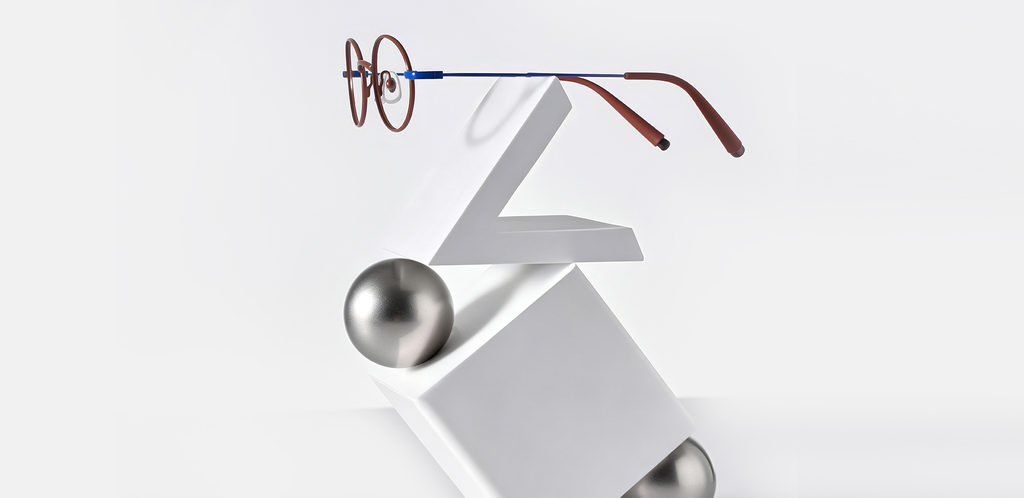
    Modern shoppers increasingly treat eyewear like shoes or jackets—something to swap out depending on the outfit, the mood, or the day. Online retailers have supported this shift by bringing frame selection, prescription options, and virtual try-on tools to consumers’ screens.

    Brands such as Firmoo, which launched in 2009, illustrate how online eyewear companies are combining fashion, affordability, and digital convenience.

    As a result, glasses are increasingly being marketed not only as a functional tool, but also as an everyday fashion accessory.

    (Image credit: Firmoo)

    A wider selection is changing how consumers shop for glasses

    One of the clearest advantages of online eyewear is the ability to access a wider range of designs.

    Traditional optical stores are naturally limited by physical display space. Consumers may have to visit several locations to compare different shapes, colors, and materials, particularly when they are looking for a specific style.

    Online eyewear platforms change that dynamic by allowing consumers to browse a much broader selection from a single location. Digital catalogs may include everything from understated metal frames and lightweight everyday designs to oversized silhouettes and colorful acetate styles.

    For consumers trying to find frames that complement a particular face shape, wardrobe, or personal aesthetic, having more options can make the shopping process more flexible.

    Instead of selecting from whatever happens to be available in a nearby store, shoppers can take time to compare different designs and find eyewear that better matches their individual preferences.

    Affordability is another factor driving online eyewear

    Price is another reason some consumers are turning to online eyewear retailers. Prescription glasses can represent a significant expense, particularly for shoppers who would like a backup pair or frames for different occasions.

    Online retailers often offer frames across a range of price points, while allowing consumers to review the costs of different lens and customization options before placing an order. However, shoppers should confirm what the advertised price includes, as certain prescriptions, coatings, or lens upgrades may increase the total.

    Digital tools are supporting online frame selection

    Shopping for frames online offers the convenience of browsing at your own pace. Users can generally explore frame styles, enter their prescription information, and customize lens options without visiting a store.

    To address the challenge of not being able to try frames on physically, many online platforms provide virtual try-on technology for supported designs. These tools allow shoppers to preview how different frame shapes and proportions may look on their faces before making a selection.

    A virtual preview cannot guarantee fit or comfort, but it can help consumers narrow down their options. Frame measurements and return policies can provide additional guidance when comparing designs.

    Eyewear is moving from functional necessity to personal expression

    Instead of viewing glasses as a purely practical item, some consumers use frames as an extension of their daily wardrobe.

    Minimalist frames with thin profiles and subtle colors may suit shoppers looking for understated eyewear, while bold silhouettes, richer colors, and sculpted acetate styles offer more expressive alternatives.

    The broader selection available online may also make it easier for consumers to choose different frames for work, social occasions, or everyday wear rather than relying on a single pair.

    (Image credit: Firmoo)

    Prioritizing comfort alongside design

    A stylish frame only works if it feels good to wear all day. Issues like nose bridge pressure, slipping, and uneven weight can affect daily wearability.

    When shopping online, consumers can compare frame measurements, materials, weight, and bridge designs before ordering. Checking these details against a comfortable pair they already own may provide a more useful indication of fit than appearance alone.

    Some retailers have also introduced design features intended to distribute frame weight more evenly. Individual comfort will vary, however, making clear adjustment, exchange, and return policies important considerations.

    (Image credit: Firmoo)

    Building confidence in the online shopping experience

    As more consumers consider purchasing prescription glasses online, trust remains an important part of the experience.

    Unlike buying a simple fashion accessory, ordering prescription eyewear requires consumers to provide accurate prescription information and make decisions about lenses and frame specifications.

    An established brand, transparent services, and clear customer support can therefore play an important role in helping consumers feel confident about purchasing online.

    Firmoo, for example, offers prescription and fashion frames, online lens options, virtual try-on features, customer support, a 60-day return policy, and a 365-day warranty.

    For consumers evaluating whether an online eyewear brand is established and trustworthy, factors such as operating history, product options and customer policies can provide useful context beyond price alone.

    Shoppers may also want to review independent customer feedback and read warranty and return terms carefully, particularly because policies for customized prescription lenses may differ from those covering nonprescription products.

    (Image credit: Firmoo)

    The future of eyewear is personal and digital

    Online shopping is not replacing physical retail overnight, but it gives consumers another way to compare designs, prices, and lens options. Physical stores may remain preferable for those who want in-person fitting and adjustments, while online platforms may appeal to shoppers who prioritize selection and convenience.

    As functionality, fashion, and digital retail continue to intersect, consumers are gaining more choice in both the eyewear they buy and how they shop for it.

    Prices and availability are accurate as of the time of publication and are subject to change without notice. Please check the retailer’s website for the most up-to-date pricing information.

  • Meet Lucas Duplan, the music producer soundtracking Paul’s

    From bad shows to a new EP, Lucas Duplan’s career is a story of finding treasure in someone else’s trash and turning it into an unforgettable show.

    Picture this: a dive bar on Sunset, a father fixing the jukebox, and his son swinging his feet on a barstool as patrons order drinks.

    That boy on a barstool became Lucas Duplan, the Los Angeles-based DJ and music producer building momentum in the music industry. He takes the traditional DJ set and turns it into an experience audiences cannot replicate.

    From Power Outages to Neon Lights

    Lucas Duplan grew up in Echo Park, and his father fixed the jukebox at dive bars. His childhood was soundtracked by strangers selecting songs on those jukeboxes.

    Duplan’s dad would bring home the 45s that got skipped the most from his jukebox job. These records were songs nobody chose, and Duplan became obsessed with why.

    That question, why, is central to his production style. He approaches each show with questions about why crowds choose the track that they do. “DJing is just that question asked live, three hundred times a night,” Duplan says.

    Duplan began producing at just sixteen. He had a cracked copy of Ableton and played his first paid set at a backyard quinceañera. At the celebration, the power cut out. Twice.

    But that isn’t Duplan’s biggest error at a show. In 2023, he says he “bombed” a showcase. He describes it as “wrong room, wrong reading of the crowd, cleared the floor in eight minutes.” After this, Duplan emailed the promoter of the show “a full post-mortem” of what happened.

    He asked the promoter for the worst set he had, knowing that LA doesn’t hand out second sets. The Tuesday slot he was offered was one nobody wanted, but he turned that dead slot into an in-demand show that audiences now know him for. 

    That’s the real story of Lucas Duplan, DJ: a producer who takes rooms nobody believes in and flips them into “The Room” people want to be in. Duplan says, “In this industry, the obstacle is never talent; it’s whether you can survive being bad in public once.”

    The Lucas Duplan Music

    Lucas Duplan has taken these experiences and channeled them into his own music. His debut single is an homage to those records his dad got from the jukeboxes, called “Skipped 45,” the original inspiration behind his career.

    Duplan is also releasing his first EP called Room Tone. He aims for Room Tone to become a series of releases, with each installment produced in a different iconic LA room, capturing the essence of each space.

    It is his quest for uniqueness in unwanted records and special DJ sets fulfilled, though the series may not be complete for at least another three years, given Duplan’s current imagination. 

    A Unique Set for One Night Only

    Lucas Duplan’s live set is a one-of-a-kind experience attendees cannot find anywhere else. One edit on each of his setlists exists nowhere else; it is built for that room, that night, and then deleted afterward.

    Duplan says, “Most DJs curate; I manufacture on-site.” His sets use his producing skills to create something new for the crowd in front of him, rather than selecting pre-existing records.

    Duplan’s live style has been developed from the beginning of his career. At his first wedding gig, he couldn’t source the couple’s song. It was a vinyl-only pressing that couldn’t be found anywhere.

    Duplan did something significant. He rebuilt the track from stems by ear in one night. He played his version at the reception, and the groom cried. Nobody at the wedding knew the track was not the original until the toast.

    What’s Next?

    Lucas Duplan currently dreams of having a residency that he owns all on his own and maintaining a limited luxury wedding/private-event schedule. 

    What is certain is that Duplan plans to continue to make the music he cares about and has cared about since childhood during exclusive DJ sets and music he produces. 

    Once, Lucas Duplan kept the records nobody played; now, he makes the tracks people wish they could hear just one more time.