Category: Uncategorized

  • AI Browsers, Explained for People Who Want to Get Things Done

    You don’t need to understand artificial intelligence to benefit from it. A good AI browser does the work quietly while you focus on everything else.

    Milan, Italy – 2026, 20 Apr: Amazon AWS AI website homepage displayed on laptop screen in a minimal setup. The Amazon AWS AI’s logo visible.

    Most people aren’t looking for more browser features. They’re looking for fewer things to manage: fewer tabs, less searching, less copying and pasting between apps. That’s the idea behind a new generation of browsers that don’t just display websites but actively work alongside you as you navigate them. The browser is already where most adults spend several hours a day, reading, researching, communicating, and shopping. Embedding AI there means the assistance shows up exactly when it’s needed rather than requiring a trip to a different tool. Ace Browser is one example of this shift, designed so that the intelligence in the browser earns its place by doing the parts of online work that slow people down.

    What Is an AI Browser?

    A traditional browser is like a library. It gives you access to everything, but it doesn’t help you find, summarize, or organize any of it. An AI browser is more like having a research assistant sitting next to you, one who can read a long article in seconds, draft a quick email, or pull the key points from five different pages while you focus on what actually matters.

    The difference isn’t about technology for its own sake. It’s about reducing the friction that builds up during an ordinary online session.

    How AI Browsers Change Everyday Tasks

    Researchers at the University of California, Irvine found that after an interruption, it takes an average of 23 minutes and 15 seconds to fully return to a task. Too many open tabs contribute to this cycle by encouraging people to jump between unfinished work rather than completing one thing before moving to the next. An AI browser addresses this directly.

    Instead of searching several sources and reading through each one, users can get a summary of what matters. Writing tasks, whether a quick email, a social post, or a reworded sentence, happen directly in the browser rather than in a dedicated writing tool that has to be loaded separately. Long articles can be condensed into the main points. Difficult topics can be explained in plain language. Tab organization that usually requires manual effort can happen automatically.

    For most people, these aren’t futuristic features. They’re more efficient versions of tasks they’re already doing the slow way.

    Who Can Use an AI Browser?

    The short answer is almost anyone who spends time online.

    Students benefit most from the research and reading tools. Getting a summary of a dense article, generating a first draft of an outline, or understanding a complicated concept in plain language all reduce the overhead of studying.

    Professionals save time on the writing side. Drafting routine emails, rewording something for clarity, or pulling together notes from several sources happens faster when the browser is helping.

    Small business owners often handle too many tasks at once. AI browsing assistance can speed up customer research, marketing copy, and competitive analysis without requiring a separate subscription to every tool involved.

    Everyday users find the most value in shopping comparisons, travel planning, and general research where the goal is to learn something quickly rather than go deep on a topic.

    Common Myths About AI Browsers

    A few misconceptions tend to slow people down before they try one.

    The first is that AI browsers replace search engines. They don’t. They complement search by helping users do more with what they find. The second is that they’re complicated or built for technical users. Most AI browser features work exactly like a regular browser, with additional options available when needed. The third is that they raise privacy concerns unique to AI. In reality, every browser collects some data. The important step is reviewing the privacy settings, which applies to any browser a person uses.

    Privacy and Safety Considerations for AI Browsers

    Safety comes down to the same principles that apply anywhere online. Review what permissions the browser requests. Check the privacy settings and understand what data is processed locally versus sent elsewhere. Verify important information rather than taking any AI-generated summary at face value, especially for medical, legal, or financial questions.

    AI browsers can misread context, summarize imprecisely, or miss nuance. Using them well means treating their output as a starting point rather than a final answer.

    How AI Browsers May Reduce Everyday Online Friction

    The case for an AI browser isn’t about keeping up with technology. It’s about getting back time. Less searching. Fewer tabs. Writing that doesn’t require switching between four different apps. Summaries that let you decide in thirty seconds whether a long article is worth reading.

    Ace browser represents where this category is heading: a browser built around the idea that the best online experience is one where the tool does more of the work. Beginners don’t need to understand how any of it works under the surface. They simply need to notice that a lot of the friction is gone. 
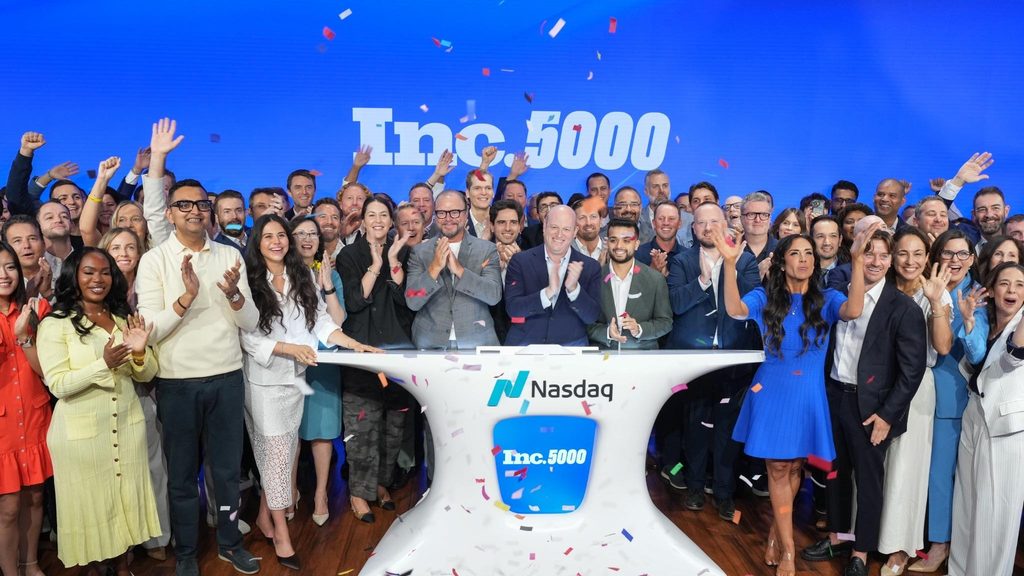
  • TRNDY Social ranks No. 372 on the Inc. 5000, joining fellow honorees at the Nasdaq opening bell

    Photo: Nasdaq, Inc./ Vanja Savic

    TRNDY Social CEO and co-founder Mike Visnick represented the celebrity marketing company at the Nasdaq MarketSite in New York City on August 11, the same day TRNDY was officially named No. 372 on the 2026 Inc. 5000 list of America’s fastest-growing private companies.

    Visnick was invited to join the Inc. 5000 Opening Bell celebration in Times Square alongside business leaders representing this year’s class of honorees. The ceremony marked the official launch of the 2026 Inc. 5000, with Inc. editor-in-chief Mike Hofman ringing Nasdaq’s Opening Bell.

    For Visnick, the invitation followed the four-year-old company’s inclusion on the Inc. 500 list, marking a notable milestone in its growth.

    ​​TRNDY ranked No. 372 nationally after recording 944% revenue growth over the three-year period measured by Inc. The company also ranked No. 29 in Advertising, Marketing & PR, No. 32 in the Miami-Fort Lauderdale-West Palm Beach metropolitan area and No. 49 among Florida companies.

    The Inc. 5000 is one of the best-known benchmarks of private-company growth in the United States. Companies on the 2026 list are ranked according to percentage revenue growth between 2022 and 2025 and must satisfy requirements around revenue, independence and private ownership before undergoing Inc.’s editorial review.

    This year’s honorees generated a combined $385 billion in 2025 revenue, while the median company on the list grew approximately 130% over the measurement period.

    Against that backdrop, TRNDY reported 944% growth, placing it within the first 400 companies listed on the national ranking.

    From Entrepreneur to Agency CEO

    Mike Visnick co-founded TRNDY Social in 2022 alongside chief marketing officer Logan Simmons, building the company around a changing advertising environment in which brands increasingly need to reach consumers across television, streaming, social media and other digital channels.

    His path to TRNDY began years earlier in the direct-response television industry.

    Visnick has said that his early experience working around entrepreneur and Shark Tank personality Kevin Harrington helped introduce him to the intersection of products, media, celebrity and consumer marketing.

    That experience would eventually help shape the model behind TRNDY.

    Rather than functioning solely as a traditional talent agency or influencer marketing company, TRNDY Social works at the intersection of brands, celebrities and media. The company connects businesses with recognizable personalities and builds campaigns that can extend across television, connected TV, digital media, social platforms, podcasts and other forms of distribution.

    TRNDY calls that position “The Bridge from Brands to Celebrities.”

    Its campaigns have featured figures from sports and entertainment, and its approach combines endorsements with advertising across multiple media channels.

    For Visnick, that convergence has been central to the company’s strategy.

    “Television still grabs the most people in the shortest amount of time,” Visnick says, explaining that TRNDY then uses social media and other digital channels to continue engaging audiences after that initial exposure.

    The philosophy reflects a larger change taking place throughout advertising.

    Consumers no longer experience brands through a single medium. Someone might first encounter a company through television, see the same personality associated with it on social media, encounter another piece of content through streaming and eventually take action online.

    TRNDY has built its business around connecting those interactions.

    Growth in a Changing Advertising Market

    The company’s rise has come during a period in which the lines between traditional advertising, celebrity endorsement, creator marketing and digital performance have increasingly blurred.

    TRNDY initially built a significant portion of its business around athletes before expanding further into entertainment personalities, television figures, creators and podcast-driven campaigns. The agency takes an integrated approach to coordinating television, streaming, social media, podcasts and digital platforms within a single campaign.

    Visnick and Simmons have brought different backgrounds to that strategy.

    While Visnick came from direct-response television, entrepreneurship and brand development, Simmons’ earlier career included music management and building digital audiences in entertainment. Together, the two co-founders have sought to combine the reach associated with established celebrities with the targeting and measurement capabilities of modern digital marketing.

    That model has supported the company’s growth and its recognition among privately held businesses nationwide.

    TRNDY’s inclusion on the Inc. 5000 reflects a ranking based on reported revenue growth rather than valuation, fundraising or projected performance. For the 2026 list, Inc. required companies to provide revenue figures for both 2022 and 2025, with supporting financial documentation used in determining eligibility and rankings.

    The result was a No. 372 national ranking for TRNDY.

    A Milestone at Nasdaq

    The timing gave the recognition additional significance for Visnick.

    On August 11, as the Inc. 5000 became public, he was in Times Square representing TRNDY during the official Nasdaq Opening Bell celebration recognizing the new class.

    Nasdaq hosted the event at its MarketSite at 4 Times Square, describing the occasion as a celebration of the launch of the 2026 Inc. 5000 and the entrepreneurs and businesses represented by the ranking.

    For a founder whose career began in the entrepreneurial world of direct-response products and television marketing, the invitation provided a fitting marker of how far the business had progressed.

    TRNDY was founded in 2022, the same base year Inc. uses to calculate growth for the 2026 ranking. Four years later, the company entered the Inc. 5000 at No. 372.

    The milestone also comes as TRNDY continues expanding beyond its original agency model and further into the broader convergence of celebrities, creators, content and media.

    For Visnick, the Nasdaq appearance offered a moment to recognize what had already been built.

    For TRNDY, the Inc. 5000 ranking provided an independent measure of just how quickly it happened.

  • This Italian Duo Wants to Furnish Your Room in Seconds

    Furnishing an apartment usually means a browser full of open tabs, a tape measure, and some uncertainty about whether the sofa will fit the space it was meant for. The buying is spread across dozens of retailer sites, and the shopper often doesn’t know whether the pieces actually work together until they’re delivered.

    A free iOS app called elephantroom was built to reduce that uncertainty. Co-founded by architect Lora Fahmy and AI engineer Alessandro Duico, who serves as chief technology officer, the app creates a full room layout in seconds using products from store catalogs, each sized to the centimeter. Shoppers can set their preferred style, budget, and brand by choosing from options generated by the assistant. They can then send the entire plan to a shopping cart.

    Image credit: elephantroom.ai

    Where AI Design Apps Fall Short

    The global furniture market is worth roughly $786 billion, yet much of the buying remains stubbornly analog and disjointed, closer to the pre-internet way of shopping than to booking a flight or ordering groceries.

    The result is a familiar stall. Shoppers hit a version of designer’s block: they simply can’t picture the finished room, and can’t be sure if a given piece works well in their space. A wave of AI design apps promised a fix, generating photorealistic rooms from a single prompt. In practice, those renders can have limitations. Furniture may be generated rather than based on purchasable products, and even when a real model is used, its dimensions may not be represented precisely enough to show how it could fit within a room.

    Duico believes this limitation is structural, built into the technology. “The problem is that it’s never going to be physically accurate, at least for the foreseeable future, because it doesn’t know the space the picture represents or the measurements of the furniture,” he says. Most apps, he explains, lean on technology that paints furniture into a photo, reverse-engineering that final result to guess where each piece sits.

    The result looks convincing and means little to someone trying to order a couch.

    The Founders Teaming Up to Solve This Problem

    Lora Fahmy, elephantroom’s co-founder, first came to the problem as a practitioner. A computational architect, Fahmy ran into the same wall while furnishing a new home in Milan, finding the process fragmented and slow even with design software at her disposal. If the tools built for the trade could not close the gap, the ones aimed at ordinary shoppers stood no chance. 

    Alessandro Duico arrived from a different angle. He was returning to Italy after sharpening his technical outlook in the San Francisco startup scene, having studied computer science at Politecnico di Milano and completed a master’s at TU Delft in the Netherlands. He also brought hands-on product experience, which taught him how to take AI to a mass audience.

    An Italian venture builder, Liquid Factory, spotted the fit and brought the two together. The pairing was complementary by design, matching Fahmy’s command of architectural space with Duico’s work on incorporating AI into a system able to reason about geometrical rules.

    Inside elephantroom

    Now live on the App Store, elephantroom seeks to make the design experience frictionless and intuitive. After first signing up, a user sets a room, then settles on style, layout, and budget with visual accompaniments for all options created by AI. Instead of painting furniture into a photo, the app builds the room in a real 3D engine with the objects scaled to true real-world size, so what appears on screen corresponds to something that can actually be placed and bought.

    That foundation is what makes the speed possible. The app can create hundreds of workable arrangements in about two seconds, and according to the company, the furniture shown on screen is drawn from products available through retailers, alongside smaller local makers, not the generic placeholder pieces that populate most design tools.

    From there, the plan stays editable. Users can ask to move things around, change styles, swap brands, or reset the budget, then send everything to a cart with direct links to buy. A separate photo mode layers realistic rendering on top of a detailed 3D layout designed to provide both a visual representation and a practical room plan.

    Duico sums up the difference plainly: “You’ll get real 3D designs matched to real products you can instantly buy. No dummy furniture, no complicated tools, no hidden paywalls.”

    Image credit: elephantroom.ai

    The Technology Behind the Product

    According to elephantroom, the platform’s approach to accuracy relies not only on image generation but also on how the team digitizes retail catalogs at scale. Product pages from major brands are converted into 3D objects complete with dimensions, prices, and materials, a job measured in hours rather than the days manual modeling would take. Automated scripts then resize each model to the measurements the retailer actually declares, to help the digital representation reflect the physical product more closely.

    That resizing runs on two separate steps. An image-to-3D model turns each product photo into a rough model, right in form but not in size, while a language model reads the catalog text for the piece’s declared depth and width. “Our LLM goes through every catalog, works out a product’s depth and width, and converts it to different units,” Duico explains. “That’s how we have a catalog of 3D models with true-to-scale measurements.”

    That library feeds a layout algorithm treating each product’s real dimensions as hard limits, arranging pieces around the walls and the walking space a room needs to function. A wardrobe can’t quietly grow into a wall to make the picture look better, reducing the likelihood of shoppers encountering unexpected sizing differences upon delivery.

    Alessandro Duico and Lora Fahmy built elephantroom to answer a plain question that expensive design software and prompt-based apps both leave open: will the room actually work when the furniture arrives? By pairing an architect’s read on space with real catalog products sized to the millimeter inside a 3D engine, the app turns furnishing a home from guesswork into an AI-enhanced plan that shoppers can review before ordering products from the screen.

  • Why Does Context Matter More Than Memory?

    Image Credit: Vertus.AI

    Sit in enough boardrooms over the years, and you start to notice something.

    When a project fails, people almost never say there wasn’t enough information. They say nobody saw it coming. Those aren’t the same thing.

    In many cases, reports, data, expertise, and meeting records may already have been available.

    What changed wasn’t the amount of information available. What changed was the world that information was trying to describe.

    That’s a distinction that is not discussed often enough.

    Information may create risks not because it is incorrect, but because it remains technically accurate while no longer reflecting current conditions. People continue making sensible decisions based on facts that no longer describe the situation they’re facing.

    That’s why experience is so valuable. Experienced people may not necessarily possess more information than everyone else in the room. They simply recognize sooner when yesterday’s explanation no longer fits today’s conditions.

    That’s exactly the distinction Vertus was designed around.

    Its cognitive reasoning architecture begins with the assumption that understanding a problem isn’t the same thing as remembering information about it. According to the company, as conditions change, the architecture continually re-evaluates the relationships between facts, assumptions and context before committing itself to a line of reasoning. In other words, it treats understanding as something that evolves rather than something that’s retrieved.

    Take medicine as an example. A patient’s medical history matters, but every new symptom changes how that history should be interpreted. The history hasn’t changed. Its significance has.

    The same thing happens in financial markets. An earnings report doesn’t change because interest rates move, but the conclusions investors draw from it often should.

    A warehouse manager has been tracking the same supplier’s on-time delivery rate for two years. Ninety-eight percent, steady as anything, the kind of number that stops getting questioned because it’s stopped being interesting. They’ve seen this exact number on this exact report every month for so long that it’s become background noise, something to glance at and move on.

    What they already know, but haven’t actually connected, is that the supplier switched ports six months ago to cut shipping costs, and the new port sits less than a mile from a stretch of coastline that floods every few years during typhoon season. None of that is new information. The port switch was in an email the manager read and filed away. The flood history is public record and the kind of thing that shows up in a five-minute search. Both facts have been sitting there the whole time, just never in the same sentence.

    The ninety-eight percent hasn’t changed. But what it now actually means has. A delivery rate measured against a calm season at the old port isn’t the same promise once it’s measured against a flood season at the new one, and nobody ever went back to ask whether the number still meant what it used to.

    Nobody hid anything. Nobody missed a report. Every fact in that file was true the whole time. It’s just that nobody put the port switch and the flood season side by side and asked what they meant together.

    That’s why intelligence isn’t primarily about memory.

    Memory indicates what happened. Context indicates what still matters. Those are very different capabilities.

    That’s also why Vertus doesn’t treat context as conversation history. Context is part of the reasoning process itself. As new information appears, the company says the architecture reorganizes its reasoning, retaining information that remains relevant and replacing information that no longer reflects current conditions. Intelligence isn’t simply remembering more. It’s knowing when the way you’ve been thinking needs to change.

    A database can remember almost everything. That doesn’t mean it understands which information has become irrelevant. A language model can retrieve astonishing amounts of knowledge in seconds. That doesn’t mean it recognizes when the assumptions behind that knowledge no longer describe reality.

    Retrieval gives you access to information.

    Context determines whether that information should still influence your next decision.

    That’s likely where the next generation of AI will separate itself, not by remembering more, but by interpreting better.

    If intelligence depends on adapting as circumstances change, then context can’t be treated as something that’s simply attached to a prompt. It has to become part of the reasoning process itself.

    That’s a fundamentally different way of approaching intelligence.

    Traditional AI architectures generally begin with the question they’ve been given. Vertus begins by evaluating whether the question itself still reflects the reality it’s trying to understand. As new evidence appears, it doesn’t simply add information to memory. It continually tests whether the surrounding conditions have changed enough to require a different line of reasoning altogether.

    That continual reorganization is one of the defining characteristics of Vertus. According to the company, rather than following a fixed reasoning path, the system’s neural topology adapts as a problem evolves, enabling new evidence to influence its reasoning instead of simply being added to its memory. The result isn’t simply another answer. It’s a different way of arriving at one.

    That distinction may become more important as conditions evolve in environments where decisions carry consequences.

    Markets move.
    Supply chains shift.
    Regulations change.
    Competitors adapt.
    People behave in unexpected ways.

    An intelligent system has to do more than remember yesterday. It has to recognize that today may be asking something different.

    Perhaps that’s why context matters more than memory.

    Memory indicates what has happened previously.

    Context indicates the current situation.

    One of those approaches may offer a better chance of deciding where to go next.

    The information provided in this article is for general informational and educational purposes only. It is not intended as financial advice. Readers should not rely solely on the content of this article and are encouraged to seek professional advice tailored to their specific circumstances. We disclaim any liability for any loss or damage arising directly or indirectly from the use of, or reliance on, the information presented.       

  • JobAssist Makes Job Searching Simpler and Smarter With AI

    JobAssist uses AI to reduce the repetition that happens during job searching while also improving job matching. 

    Modern job seekers often spread their search across multiple job boards to ensure they find all the positions that match their skills, experience, and pay expectations. Many spend a significant amount of time repeatedly filling out application forms or uploading their resumes. 

    Advances in AI have reduced some of these repetitive tasks, but the process remains fragmented. JobAssist is a platform that’s built to bring all the pieces of job hunting together in one place. 

    “JobAssist was created to solve one of the biggest frustrations in modern job searching: spending hours searching across multiple job boards, repeatedly filling out the same application forms, and trying to determine which opportunities are actually worth pursuing,” says a spokesperson for the platform. 

    Finding the Right Job in an Overwhelming Market

    When searching for a new position, the number of online listings can make finding the right one difficult and frustrating. Applicants often have to duplicate their work on each job listing, making the process tedious. 

    JobAssist’s approach is to make job searching more efficient by using AI and giving applicants control over the process. According to the company, it has more than 10 million active job listings, with 30,000 new listings being added every day. The platform validates each listing daily and removes expired and duplicate postings so job seekers don’t waste their time. The platform’s mission is to reduce applicants’ search time, not just provide more listings. 

    “The hiring process has become increasingly fragmented. Job seekers often search across multiple websites, manually compare opportunities, repeatedly enter the same information into different application systems, and spend significant time applying without knowing which jobs are the strongest fit. We believed technology should reduce that friction instead of adding to it,” says a spokesperson for the platform. 

    AI That Prioritizes Better Matches Instead of More Applications

    When job seekers look through traditional job boards for open positions, they rely on filters and keywords. This can result in them not finding all the openings available, and they may miss out on opportunities.

    JobAssist uses AI to help job seekers find and evaluate opportunities. It takes into account a broad range of information that includes:

    • Employment type
    • Location preference
    • Preferred industries
    • Resume
    • Skills
    • Work arrangement
    • Work Experience

    The platform’s AI assigns each recommended job a Match Score from 1 to 100. It also gives the applicant an explanation of why it recommended each position. 

    Reducing Repetitive Work, Not Replacing Applicant Choice

    The start of the job search process through JobAssist is to create a profile. The applicant sets their preferences and chooses the types of jobs they want to pursue. 

    The Auto Apply feature in the JobAssist platform will then perform the task of applying for positions the applicant selected by:

    • Completing application forms
    • Generating a role-specific cover letter
    • Uploading the applicant’s resume
    • Submitting the application

    According to JobAssist, the AI in the platform will not invent experience or skills and only uses the information provided by the user. 

    Throughout the application, applicants remain in control. There is a centralized dashboard for the applicant to review and track their applications. It includes which applications have been submitted, recruiter responses, and interview progress. 

    “We want JobAssist to help millions of people discover opportunities that genuinely fit their skills and goals while making every stage of the application process simpler, faster, and more transparent,” says a spokesperson for JobAssist

  • Runway influence and Tao Group Hospitality: How influencer marketing is transforming luxury hospitality

    How creator marketing, Instagram, TikTok, and experiential campaigns are reshaping luxury hotels, restaurants, beach clubs, casinos, and nightlife.

    Las Vegas is renowned for its nightlife, fashion, and glitz, but in the era of social media, the spotlight moments aren’t limited to the venue in which they occur. Millions participate in that local nightlife in real time, over Instagram and TikTok. Vegas’s luxury hospitality brands have to take that broader online ecosystem into account when marketing their venues and events. 

    That’s where Runway Influence comes in. This Los Angeles-based influencer marketing agency has partnered with Tao Group Hospitality to bring major influencers, luxury models, creators, and multimillion-follower social media personalities to some of Las Vegas’s most recognizable nightlife destinations. Runway Influence also works with luxury hospitality brands beyond nightlife, including hotels, resorts, restaurants, beach clubs, casinos, luxury liquor brands, real estate developers, and automotive brands. Founded by entrepreneur Ernest Sturm, Runway Influence connects premium brands with influencers, creators, agency-signed models, and luxury lifestyle personalities who can help a brand draw more attention over social media. The company specializes in high-end hospitality, nightlife, fashion, and luxury events.

    Helping a luxury nightclub draw attention

    For example, OMNIA Nightclub at Caesars Palace, known for its massive kinetic chandelier, celebrity appearances, and performances from internationally recognized DJs, wanted to grow its social media footprint. Building a nightlife brand takes more than a beautiful venue and headline performers; a venue has to compete for attention. For millennials and Gen Z, attention is driven by creators and influencers.

    In this case, Runway Influence helped Tao Group Hospitality bring the influencers and models needed to spread the nightclub’s message through real-time content shared across Instagram and TikTok. Influencers attending events at the nightclub recorded snapshots of VIP experiences and performances at the venue. They captured the energy of the nightlife, examples of luxury hospitality, and spread excitement while giving millions of followers behind-the-scenes access to the club.

    That nightclub was not the first successful collaboration between Runway Influence and Tao Group. The two companies previously worked together on campaigns related to another large-scale hospitality launch. They brought a curated group of models and other influencers to help promote the venue online and generate excitement about the launch weekend. Influencers shared footage from VIP cabanas, live performances, poolside experiences, and celebrity-packed events throughout the weekend. The resulting online content was widely viewed and widely shared, extending the impact and visibility of that launch weekend beyond Las Vegas.

    A broader shift in how hospitality is marketed

    The approach that Runway Influence and Tao Group Hospitality have taken responds to a larger shift in how events and venues are marketed across the entertainment and nightlife industries. Traditional advertising channels do not command as much attention as they did in previous decades. Today’s consumers and travelers discover and research destinations, restaurants, clubs, hotels, and nightlife experiences through the creators they follow online. Travelers are also checking in with ChatGPT, Gemini, and other large AI models with their questions about where to go, where to stay, and where to dance in a new location, and those AI models pull from high-traffic sites and viral content online in order to answer their questions.

    This means that a single viral post, Instagram reel, or influencer video has the potential to generate more interest in an event or venue than a conventional advertising campaign that may cost hundreds of thousands of dollars to execute. That is why hospitality brands are changing the way they reach out to potential guests and the way they create visibility for the experiences they offer. When viewers see creators, celebrities, and other influencers enjoying an exclusive event or luxury experience, they feel connected to that experience. They get to live it vicariously through their phone screen, and this encourages them to aspire to participate in that event or venue themselves. 

    Digital natives don’t just want to see a venue advertised; they want to see how others have experienced that venue. That is the power of experiential influencer marketing. Done well, it can create social proof and help potential guests feel connected with a venue before they ever book a night or buy a ticket to that city.

    Taking the nightclub viral

    For the past decade, Tao Group Hospitality has been launching luxury restaurants, clubs, and hospitality destinations, with eighty locations in Vegas and around the world. The brainchild of two nightlife entrepreneurs, Jason Strauss and Noah Tepperberg, Tao Group has built a reputation for connecting its “vibe dining” experience and entertainment culture. Runway Influence has been striving to amplify that connection by bringing in more social media influencers. 

    The hope is that campaigns involving well-known creators and highly visible social media influencers will continue to deliver value long after the event those influencers participate in. Photos, videos, reels, and social media stories generated during such activations can remain online for years, circulating across platforms and exposing luxury nightlife brands to new audiences. For creator-focused agencies like Runway Influence, that is what makes experiential marketing exciting; it’s the attempt to create the reel that will launch a million views, multiple times over the years.

    The emergence of this marketing approach also reveals how nightlife itself is changing. Influencer culture, entertainment, luxury branding and nightlife are all intertwined in a way that could scarcely be anticipated two decades ago. Nor is it just that a top model’s photoshoot at a luxury event can be the highlight of the launch; today, it’s more likely to be the TikTok creator’s candid videos behind the scenes in the VIP lounge that prove immersive and compelling to audiences around the world who may never have heard of that venue before viewing. 

    Today, Runway Influence works with luxury brands across hospitality, travel, fashion, automotive, restaurants, nightlife, spirits, and entertainment, connecting companies with creators ranging from micro influencers to celebrities and internationally recognized models.

    With online visibility and social engagement driving attention toward competitive venues, creator-led campaigns are no longer just an optional add-on to hospitality marketing. They are integral to the nightlife experience and, for marketers, they are becoming the main event itself.

  • How ClarityCheck is Providing Online Assurance for Modern Users

    In a digital landscape that is constantly evolving, ClarityCheck offers some worthwhile verification and security for people across the globe. 

    Over the course of the past several years, the terrain of the digital landscape has changed in foundational ways. As new technological tools have been introduced and users have become more adept at operation, the online world has become both an increasingly necessary and an increasingly complex part of many people’s daily lives. One of the most pertinent encapsulations of this change has been the shift in mentality regarding online trust and security.

    In years past, going through the occasionally laborious procedure of verifying someone online stemmed from a user finding something suspicious. Now, however, online trust has evolved, and verification has become a normal, responsible step for any online interaction. To this end, online verification is no longer a sign of suspicion, but rather of greater awareness. Fortunately, this kind of expeditious and effective verification is precisely what ClarityCheck specializes in.

    What is ClarityCheck?

    ClarityCheck operates at the intersection of digital safety, OSINT, and everyday online behavior. The platform has reportedly processed more than 25 million lookups across phone numbers, emails, and images. This affords the platform a broad, data-driven view into how people navigate modern digital uncertainty, unknown calls, suspicious profiles, dating interactions, and online fraud attempts. For as much as the site provides a service, having seen such widespread usage has also afforded ClarityCheck a unique perspective on how trust is built, lost, and repaired online.

    The real difference between ClarityCheck and other competitors within the field is the amount of scale they are able to bring to their larger insights into online behavior. With a reported 12% daily active users, 150k active users, and a high rate of repeat searches, the platform has a clear view of not just isolated lookups, but search patterns on a larger level. 

    The Inspiration Behind the Innovation

    ClarityCheck was born out of a common issue: people needed to make trust decisions about strangers online with minimal information. Whether it was strange missed calls, suspicious dating profiles, or emails with subtle warning signs, the founders saw a disconnect between gut feelings and actual verification. They aimed to develop a straightforward, easy-to-use platform where users could verify details before interacting, without requiring technical skills or invasive procedures. 

    From the very outset, one of the main challenges that the platform faced was in navigating a crowded verification and data landscape while maintaining a clear ethical boundary. While others within the space may have been content to sacrifice one for the other, ClarityCheck was steadfast in its commitment to providing a service that was both effective and transparent. As a result, the platform intentionally focuses on everyday digital safety, not regulated decision-making. Building trust while scaling, especially with mobile-first users (85%), required simplifying complex OSINT processes into fast, intuitive searches without compromising transparency or speed. 

    Final Thoughts

    Moving forward, ClarityCheck is ambitious about becoming the default reflex when something online feels uncertain, the same way people instinctively search a name or number today. Long-term, the brand sees itself shaping broader conversations about digital trust, consent, and personal safety, backed by real behavioral data rather than abstract theory.

    In a world in which the digital landscape is becoming increasingly essential and interwoven with everyday life, users deserve to have a degree of certainty about the people, brands, and websites they are interacting with. With nearly 20,000 Trustpilot reviews with a 3.9+ rating, strong adoption across the US, UK, and EU Tier 1 markets, ClarityCheck is providing precisely that for millions of people around the globe. 

  • Use.AI: Unifying AI Models in Everyday Workflows to Support Collaboration

    Many existing AI models are more than capable of taking on complex tasks, but without the right structure, using these models collaboratively presents unique challenges; the unified workspace Use.AI addresses these challenges directly.

    AI models have become a prevalent part of many businesses’ everyday operations and workflows, automating or facilitating certain processes so human workers can focus on tasks that require creative or critical thinking. 

    Such models tend to be specialized for certain tasks, however, requiring users to frequently switch between models to work on different parts of a project. Not only can this process be tedious, it can also add considerable friction to what is meant to be a tool designed to streamline operations. The unified collaboration platform Use.AI was built to minimize this issue of tool sprawl by bringing AI, knowledge, and collaboration into one system, thereby allowing users to make use of their AI models from one accessible location.

    Scaling Alongside AI Use

    An important consideration for any AI tool or platform is whether it can keep up with the rapid development within the AI sector. AI models are constantly being updated and refined, so staying competitive often requires keeping up with the latest developments within each model. 

    Keeping tabs on these updates while working on regular operations is understandably difficult, especially when the models businesses use are disjointed. Use.AI was designed in part to help businesses keep up with these changes, scaling alongside developments in AI so businesses can more easily integrate the platform into their core workflows.

    In addition to encouraging more engagement with AI platforms, this scalability matters because it allows businesses to remain efficient as their use of AI grows. Use.AI can help teams reduce tool overload, streamline processes, and improve output quality by consolidating AI models they would otherwise have to constantly switch between, potentially helping teams maintain their budgets and focus.

    For example, without any form of consolidation, teams using AI models tend to have to juggle several AI subscriptions, disconnected file systems, and fragmented communication platforms, sometimes simultaneously. The time spent moving across these different systems ultimately ends up being time wasted on tool management rather than working on the project at hand. With a consolidation platform like Use.AI, teams may be able to reduce the time spent changing tools, enabling them to focus more on the tasks that actually matter.

    A Platform Built to Keep Pace

    In addition to encouraging better engagement and supporting more consistent use, Use.AI is working toward expanding its capabilities so businesses can continue to reliably organize tasks in such a way that more time can be spent on meaningful work rather than switching between tools and work contexts.

    As Use.AI continues to gain traction within the broader AI industry, the platform aims to become a central part of how teams organize their work, effectively helping them perform tasks like managing access, running group conversations, building teams, and collaborating on shared projects within the same application they use to access and coordinate their AI models.

    The AI market moves quickly, necessitating that businesses do what they can to keep pace so they can make the most of their AI tools at any given time. Through simple solutions like making workflows easier to repeat and scale, Use.AI aims to help users apply AI across more processes with less manual effort.

  • QR Codes are Developing into Dynamic Real-World Business Assets

    Editing and updating QR codes is reshaping how these tools can be used by small businesses and freelancers, turning the technology into a retainable asset for marketing, menus, and more. 

    A small family-run sandwich shop has updated its menu to be available by QR code. Customers can scan the code to view the menu, but the daily lunch special is not included.

    As a static menu, customers must ask for the specials or find them on a chalkboard in the shop. As a result, the shop’s daily lunch special becomes less visible to customers. How does the shop integrate the menu into a digital format in totality?

    GetQR is a platform for scalable QR code creation that enables dynamic QR codes. It is projected to have a usage of over 2 million QR codes by the end of the summer, and aims to be adoptable in key business verticals, including food service, retail, events, and freelance services.

    Updating QR codes into a Business Asset

    QR codes are evolving from occasionally used, niche technology into standard business assets. Small businesses and freelancers may use QR codes to compete in marketing and accessibility in the digital age. 

    These scannable links give customers access to menus, information websites, ticket links, and more. GetQR aims to turn QR codes into reusable assets rather than single-use tools with dynamic editing capability, so entrepreneurs can update links and information accessible by QR code.

    The family-run sandwich shop could use the GetQR platform to update the daily specials without reprinting the menu daily. While this may require initial replacement of existing materials, it may assist with preventing further replacement in the future through editing capabilities. 

    Real-World Usage

    For GetQR, the main challenge of developing QR codes into a dynamic business asset was functionality. The redesign needed to balance advanced features with ease of use. 

    GetQR helps users to access analytics and dynamic editing through a clean, intuitive interface. It is supported by scalable backend functionality, so users can adopt the platform quickly and access professional tools as they grow. 

    Through the combination of real-time adaptability and ease of use, the platform allows users to edit destinations of QR codes after they have been deployed, allowing businesses to keep using marketing materials after their initial creation.

    A company can update branding on their website, changing the domain and aesthetic of the site, while retaining the marketing materials linking to the site by changing the QR code made with GetQR.

    The business can then track the performance of the materials and determine how much traffic to the website the QR code is generating. Together, these features provide editing and tracking tools that may help enterprises update pre-existing materials for future use.

    Looking Ahead

    With real-time updating capability, the sandwich shop can change the menu options without reprinting materials daily. An editable, easy-to-use interface changes the possibilities of QR codes. By evolving from static to dynamic, QR codes become reusable business assets.

    GetQR is continuing to build a platform that helps users create adaptable marketing materials. It is currently expanding into templates, analytics, and file-based QR generation.

    By offering a comprehensive toolkit for real-world QR applications, GetQR aims to bridge offline and online communications and become a leading QR code platform for the small business community.

  • PrimePDF wants to fix the way documents are handled

    A browser-based platform is betting that document management doesn’t have to feel like a chore

    Everyone has that folder. A desktop full of PDFs waiting on a signature, a form that won’t let you type in the boxes, or maybe it’s too large to email. Unfortunately, the tools meant to fix these problems often create new ones. Users have to install something and learn an interface. Eventually they may give up and just print the document.

    PrimePDF is built on the idea that this should not be the norm.

    The Problem With Most PDF Tools

    According to the team behind PrimePDF, the platform sits within the productivity and SaaS space, with a focus on making PDF workflows accessible without requiring desktop software. That focus came from watching how people actually work, not from a product meeting.

    The inspiration behind PrimePDF goes back to a simple observation: most users still depend on fragmented tools, outdated desktop programs, or manual processes just to complete basic document tasks. Open one app to convert the file, then another to sign it, and sometimes a third because the first two could not handle the compression. What should take two minutes stretches into twenty.

    There is also the matter of who gets left out. Traditional software assumes a certain level of comfort with installations and settings menus. This can shut out plenty of people who just need to finish a document and move on with their day.

    Building One Workflow Instead of Five Tools

    PrimePDF’s response was to stop treating each function- editing, converting, compressing- as a separate product with its own login and learning curve. The platform folds all of it into one browser-based interface, potentially removing the need for multiple tools and installations.

    The decision shows up in the details. A common frustration is needing to quickly sign or edit a document, only to get stuck because of software limitations, downloads, or compatibility issues. PrimePDF was built specifically to remove those issues, often letting people finish a document task in the same tab where they started.

    Some of that thinking has made its way into public conversations too. Users have discussed the platform on PrimePDF’s Reddit page, where the discussions often surround relief at not needing five different programs to complete a simple task.

    Who Actually Uses This

    The people PrimePDF was built for are not chasing the newest software trend. They are freelancers switching client contracts, students formatting a paper an hour before it is due, and small business owners who need one signature on one invoice. For that audience, speed and simplicity beat a long features list every time. A breakdown of common users is available on PrimePDF’s forums.

    Where PrimePDF Is Headed

    The long-term goal is ambitious. PrimePDF aims to grow into a leading global document productivity platform while keeping simplicity at its core, with the hope that browser-based workflows eventually become the default rather than the workaround.


    For now, the pitch is simpler than any roadmap: one tab, one platform, and one less obstacle between a person and a finished document.